
 Monet David, MS, LPC, ADHD-CCSP
ADHD 101
 Monet David, MS, LPC, ADHD-CCSP : Sep 24, 2024, 2:36:00 PM
Ever felt like your mind is a whirlwind of thoughts, racing faster than you can keep up? Imagine a Ferrari engine with bicycle brakes. Welcome to the...
-1.png)
If you are a woman who received an ADHD diagnosis in adulthood, you likely remember the exact moment the pieces finally came together. For many, it brings a wave of intense relief-finally, an explanation for why simple, daily tasks have felt so monumentally difficult. But that relief is almost always accompanied by a profound sense of grief. You look back at decades of your life and wonder how much suffering could have been avoided if someone had noticed sooner. You think of all the times you berated yourself for being "lazy," "careless," or "flawed," when your brain was simply operating on a completely different frequency.
For generations, the clinical and cultural blueprint of Attention-Deficit/Hyperactivity Disorder (ADHD) was built around a very specific demographic: hyperactive school-aged boys. The diagnostic criteria historically favored externalizing behaviors-the children who couldn't sit still, who disrupted classrooms, or who impulsively jumped off playground equipment.
But ADHD is not a one-size-fits-all condition. When it presents in women and girls, the hyperactivity rarely manifests as physical restlessness. Instead, it turns completely inward, transforming into a relentless, exhausting mental whirlwind. Because this internal storm is invisible to the outside world, millions of women go undiagnosed until they reach a breaking point in adulthood.
The reality of ADHD in women is heavily supported by modern data, revealing a stark diagnostic disparity between genders during formative years. According to data compiled by the Centers for Disease Control and Prevention (CDC), boys are more than twice as likely to receive an ADHD diagnosis in childhood compared to girls.
For more data related to ADHD diagnosis, disparities, treatment, and more, please explore the CDC's ADHD Data and Statistics page, published in 2024.
This gap does not exist because males are inherently more prone to neurodivergence. Rather, it highlights a profound recognition bias. Research published by Attoe and Climie (2023) indicates that while the childhood diagnostic ratio heavily favors males, the gender ratio among adults narrows dramatically to nearly 1:1.
To read more on the findings of Attoe and Climie (2023) related to the impact of undiagnosed ADHD in women, explore the full review: Miss. Diagnosis: A Systematic Review of ADHD in Adult Women
This sudden equalization in adulthood tells a clear story: girls with ADHD do not magically develop the condition when they turn eighteen. They simply slip through the cracks of the education and pediatric healthcare systems, carrying the invisible weight of their neurodivergence alone until the complex demands of adult life cause their coping mechanisms to fracture.
Why are girls missed so frequently? The answer lies in social conditioning and a psychological phenomenon known as masking or social camouflaging. From a very young age, girls are heavily socialized to be cooperative, organized, quiet, and hyper-attuned to the needs of those around them. When a young girl experiences the internal chaos of ADHD, she quickly learns that her natural behaviors may be interpreted as dramatic, talkative, or messy. To avoid social rejection or reprimand, she begins to meticulously copy neurotypical behaviors.
Masking encompasses any adaptive behavior-whether conscious or subconscious-designed to hide ADHD symptoms.
ADHD in Complex Cases: Clinician Guide and FAQ, from Hayes (2025), explores these concepts in more detail.
For a woman, this might look like:
Compulsive Over-Preparation: Spending hours rehearsing a simple presentation or script for a phone call to ensure you don’t lose your train of thought or say the "wrong" thing.
The Hyper-Vigilant Calendar: Creating elaborate, rigid systems of alarms, sticky notes, and planners. To the outside world, you look incredibly organized; in reality, these systems are a desperate firewall preventing your life from collapsing into chaos.
Suppressing Physical Stims: Forcing yourself to sit perfectly still in meetings, reworking your physical restlessness into invisible micro-movements like clenching your toes, spinning a ring, or tightly gripping a pen until your knuckles turn white.
The Quiet Collapse: Existing in an "always on" state at work or school, only to completely crash, lose all executive function, and experience intense emotional meltdowns the moment you return to the safety of your own home.
While masking allows women to appear high-functioning, it comes at an astronomical neurological cost. It requires a continuous, exhausting expenditure of mental energy just to maintain a baseline facade of normality. Over time, this chronic self-monitoring acts as a direct pathway to profound burnout, severe fatigue, and an identity crisis where you no longer know who you are underneath the mask.
.png?width=242&height=242&name=Blog%20Header%20Images%20(13).png)
Because the surface-level presentation of masked ADHD looks like a woman who is highly capable yet deeply stressed, health professionals frequently misread the clinical picture. It is incredibly common for women to spend years, or even decades, in the mental health system being treated exclusively for Generalized Anxiety Disorder (GAD) or Major Depressive Disorder (MDD).
Emotional distress, mood disorders, and anxiety are the most visible co-existing conditions that drive women to seek professional help.
Explore this in more detail from CHADD (Children and Adults with Attention-Deficit/Hyperactivity Disorder)'s website specifically for Women and Girls
However, clinicians often fail to ask the vital follow-up question: Is this anxiety an independent condition, or is it a survival mechanism driving an undiagnosed ADHD brain?
The Adrenaline Engine: Many women with ADHD unconsciously use anxiety as a tool to generate dopamine. Because their brains struggle to initiate tasks under normal conditions, they rely on the panic of a looming deadline, the fear of failure, or acute perfectionism to force focus.
When you treat the anxiety without addressing the underlying ADHD, the treatment often stalls. A woman might be told to "just use a planner" or "practice mindfulness," strategies that can feel actively invalidating to an executive-dysfunctional brain. The chronic feeling of failing to meet basic societal expectations—despite trying twice as hard as everyone else—inevitably turns inward, mutating into the learned helplessness that characterizes depression.
When analyzing how ADHD specifically impacts women, several distinct clinical themes emerge that set it apart from the classic male presentation:
Women are statistically far more likely to present with the Predominantly Inattentive presentation of ADHD. This means the struggle is centered on memory, organization, and cognitive energy. Your brain feels like a web browser with fifty tabs open simultaneously-three of them are frozen, an ad is playing somewhere in the background, and you cannot find the cursor.
Simple actions like cooking dinner, doing laundry, or opening mail require a massive chain of executive decisions. When the brain cannot sequence these steps, it experiences "ADHD paralysis"-a state of being completely frozen on the couch, desperate to move, yet biochemically unable to take the first step.
One of the most overlooked aspects of ADHD in women is the profound intersection between neurochemistry and endocrine health. Fluctuations in estrogen significantly impact dopamine levels in the brain. During the luteal phase of the menstrual cycle (the week before your period), estrogen drops precipitously, causing a corresponding drop in dopamine availability.
During this time, carefully constructed coping mechanisms often unravel completely. Many women find that their stimulant medications feel virtually ineffective during this week, leading to heightened irritability, brain fog, and emotional instability. This intersection becomes even more pronounced during major hormonal shifts like pregnancy, postpartum, and perimenopause.
While not a formal diagnosis in the DSM-5, Rejection Sensitive Dysphoria is an intensely painful, common experience among neurodivergent women. RSD is an extreme emotional sensitivity triggered by the perception—real or imagined—of rejection, criticism, or failure.
Because women are socialized to be people-pleasers, RSD can cause severe interpersonal anxiety. You may find yourself over-analyzing the tone of a text message, agonizing over a minor mistake at work, or constantly changing your behavior to ensure everyone around you is comfortable, all to protect yourself from the devastating emotional pain of perceived disapproval.
If you are reading this and recognizing your own reflection in these words, please take a deep, grounding breath. You are not lazy. You are not careless, broken, or fundamentally disorganized. You possess a brain structured with a completely different operating system, and you have spent your entire life trying to run software built exclusively for a neurotypical world.
Healing does not come from finding a more aggressive planner or forcing yourself to "try harder." True healing begins with radical self-compassion and shifting toward neurodiversity-affirming strategies:
Recognize that your struggles with tidiness, punctuality, or task initiation are biological hurdles, not character flaws. When you stop beating yourself up for the messy room or the forgotten email, you reclaim the emotional energy needed to actually accommodate your brain.
Stop trying to organize your life the way neurotypical gurus suggest. If out of sight means out of mind, take the doors off your closets or use clear storage bins. Work with your high-interest nervous system by gamifying boring tasks, using body-doubling (working alongside someone else), and honoring your natural energy peaks and valleys.
If you suspect you have ADHD, consider pursuing a formal evaluation with a clinician who explicitly specializes in adult, female presentations of neurodivergence. Whether your path involves targeted therapy, community support groups, or exploring medication management, you do not have to navigate the whirlwind alone.
Unmasking is a slow, vulnerable process of peeling back the layers of who you thought you had to be to find out who you actually are. It is an act of reclamation-one that allows you to finally step out of survival mode and build a life that feels authentic, sustainable, and genuinely your own.
Shifting your perspective on how your brain works is a profound transition, and you don’t have to navigate it entirely on your own.
At KDH Counseling, we believe that neurodivergence is a vital part of human diversity, not a deficit. We are proud to provide comprehensive, neurodiversity-affirming care designed to help you understand your strengths, support your daily functioning, and build a life that feels authentic to how you naturally operate. We reject the idea that people with disabilities or neurological differences need to be "cured." Instead, we focus on accommodation, self-compassion, and empowerment.
Our practice offers a full suite of supportive services tailored to your unique journey:
Our physical office is located in Lafayette, Louisiana, and we provide secure, accessible telehealth services to individuals across the entire state. Some of our clinicians are also approved to provide telehealth services in other states (i.e., Texas, Ohio, Minnesota).
Whether you are looking for formal diagnostic answers, looking for a therapist who truly understands how your brain works, or simply wanting to explore your cognitive style through educational resources, support is available. Reach out to our team at KDH Counseling today to schedule an initial consultation, and let's explore your unique path forward together.

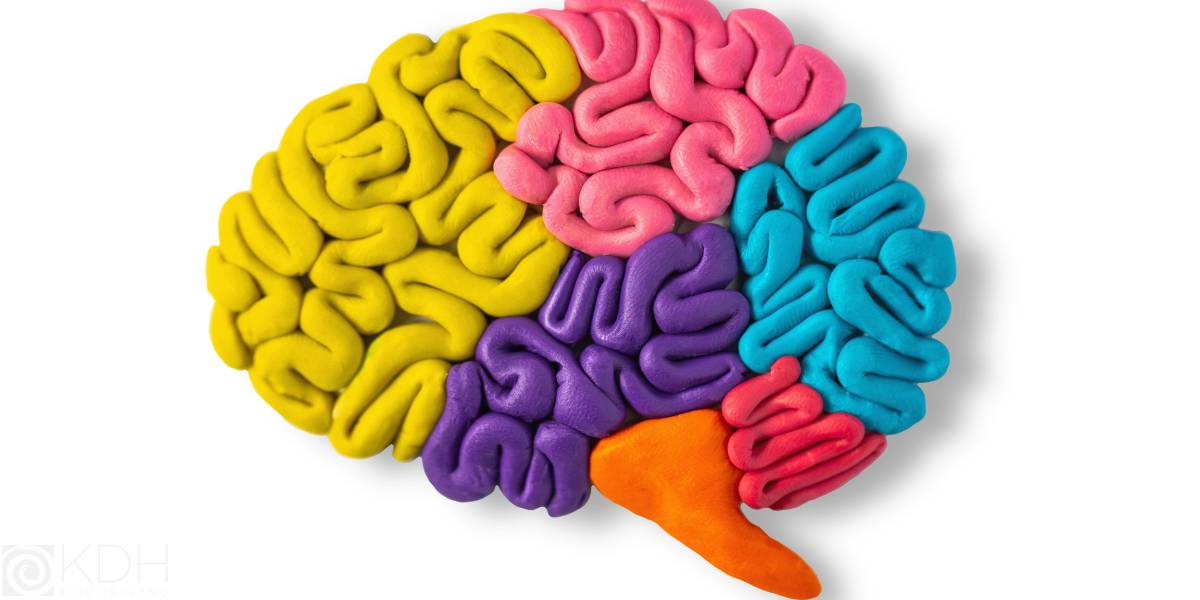
Monet David, MS, LPC, ADHD-CCSP : Sep 24, 2024, 2:36:00 PM
Ever felt like your mind is a whirlwind of thoughts, racing faster than you can keep up? Imagine a Ferrari engine with bicycle brakes. Welcome to the...

Monet David, MS, LPC, ADHD-CCSP : Jun 6, 2025, 2:07:36 PM
Making the decision to explore ADHD medication is a significant milestone. For many, it marks the transition from "trying harder" to "treating a...

Monet David, MS, LPC, ADHD-CCSP : Jul 7, 2025, 2:29:59 PM
Let's face it: when you realize you need help navigating life's complexities, the thought of finding a licensed therapist can feel overwhelming....