
 KDH Team
Panic! In the Therapy Room
 KDH Team : Mar 27, 2026, 4:33:38 PM
I chime in with a "Haven't you people ever heard of closing a goddamn door?"No, it's much better to face these kinds of things with a sense of poise...

Oprah Winfrey has a strong aversion to chewing gum.
Nicole Kidman suffers from lepidopterophobia (fear of butterflies and moths).
Johnny Depp has described a deep fear of clowns.
Indiana Jones is terrified of snakes!

Phobias are among the most widespread yet misunderstood mental‑health conditions, and artists and celebrities aren’t the exception! Phobias are serious business because they can disrupt daily life, but they’re also a reminder of how imaginative the human mind is. Phobias shape behavior, influence decision‑making, and alter the structure of a person’s daily life. While they are often portrayed as quirky fears or exaggerated reactions, phobias are often far more complex.
Phobias are rooted in biology, learning, memory, and survival instincts that have evolved over thousands of years. This article explores the nature of phobias in depth: what they are, how they form, what they feel like, how they affect daily life, and the treatments that genuinely help people reclaim their sense of safety.
 The character of Fear from the Disney film Inside Out.
Imagine calmly sipping coffee one moment, then suddenly leaping onto a chair because a spider the size of a poppy seed wandered by: that’s a phobia at work.
A phobia is an intense, persistent, and disproportionate fear of a specific object, situation, or experience. Unlike ordinary fear, which is adaptive and protective, a phobia triggers a level of distress that far exceeds the actual threat. The reaction is involuntary, often overwhelming, and can lead to avoidance behaviors that interfere with work, relationships, and daily functioning. These fears typically last more than six months, reinforcing the candidacy for identifying the experience as a phobia.
Phobias typically fall into three primary categories:
These involve fear of a particular trigger, such as animals, storms, needles, heights, or enclosed spaces. The fear is tied to a single object or situation, but the impact can ripple outward. A person with a severe dog phobia may avoid parks, neighborhoods with loose pets, or even visiting friends who own animals.
This form centers on fear of judgment, embarrassment, or scrutiny. It’s not ordinary shyness, rather it presents as a deep fear of being negatively evaluated. Everyday interactions: ordering food, speaking in meetings, or even attending gatherings, can feel like high‑stakes performances.
Often misunderstood as a fear of “open spaces,” agoraphobia is actually the fear of being trapped, unable to escape, or unable to get help if panic occurs. This can include crowded places, public transportation, long lines, or even leaving home.
Phobias rarely arise from a single cause. Instead, they emerge from a combination of learning, biology, temperament, and experience. Understanding these roots helps demystify why phobias feel so powerful and persistent.
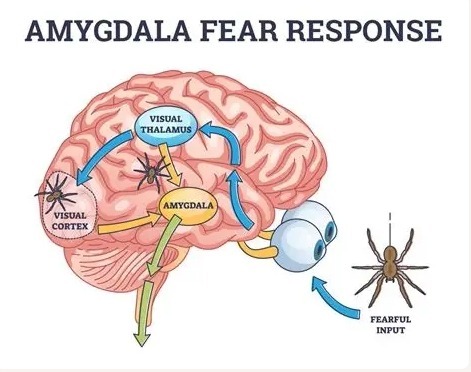
One of the most common pathways is classical conditioning. A frightening event becomes linked to a trigger, even if the trigger itself wasn’t dangerous. For example, a child who experiences turbulence on a plane may later develop a fear of flying. The brain stores the memory as a warning, and the fear becomes automatic.
Humans learn fear socially. Watching a parent scream at a spider or panic during a storm can teach a child that the object is dangerous. This kind of learning is subtle but powerful, fear can be inherited through behavior, not just genetics. Once a phobia begins, avoidance keeps it alive. Every time a person avoids the feared object or situation, the brain is rewarded with relief, which reinforces the belief that avoidance is necessary for safety. Over time, this cycle strengthens the phobia and makes the fear feel increasingly automatic and irrational.
Some fears are easier to acquire because they once protected our ancestors. Heights, snakes, spiders, and darkness were genuine threats in early human environments. The brain is primed to learn these fears quickly, even when the modern risk is minimal.
The amygdala, a small almond‑shaped structure deep in the brain, plays a central role in fear. It reacts rapidly, faster than conscious thought, to potential threats. In people with phobias, the amygdala becomes hypersensitive, triggering intense fear responses even when the logical brain knows the situation is safe.
Biology also plays a role. Some people inherit a more sensitive or reactive fear system, making them more vulnerable to developing phobias. This genetic influence often interacts with temperament; children who are naturally cautious, shy, or easily startled are more likely to form strong fear associations.
A phobia is not simply “being scared.” Triggering a phobia causes a sustained, intense physiological arousal due to amygdala-driven adrenaline release, producing symptoms like rapid heartbeat, sweating, trembling, and shortness of breath. While these can resemble panic attacks, the key difference is that phobic reactions are goal-directed, they occur only when the feared stimulus is present, whereas panic attacks can happen suddenly without any obvious cause.
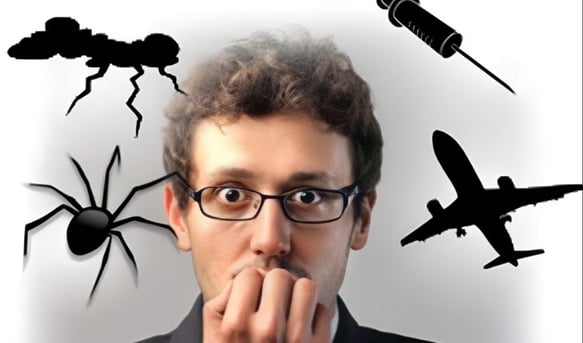
These symptoms can appear instantly, sometimes before the person consciously registers the trigger.
Avoidance is the hallmark of phobias. People may go to great lengths to avoid the feared object or situation, even when it disrupts their life.
Phobias can attach themselves to almost anything, but some appear more frequently across cultures.
One of the most common phobias, often rooted in evolutionary bias. Even harmless spiders can trigger intense reactions.
This fear can manifest on ladders, balconies, bridges, or even in tall buildings with large windows.
This phobia can lead people to avoid medical care, vaccinations, or blood tests, sometimes with serious health consequences.
Elevators, MRI machines, small rooms, or crowded vehicles can trigger panic.
This form affects communication, relationships, and professional life.
This specific phobia involves an intense fear of throwing up.
Phobias can quietly dictate a person’s choices, often in ways that outsiders don’t see.

Avoidance may seem like a solution, but it reinforces the fear. Someone afraid of flying may avoid travel altogether. Someone with claustrophobia may refuse elevators and climb multiple flights of stairs daily. Someone with social phobia may decline invitations, skip meetings, or avoid speaking up.
A fear of public speaking can limit career advancement. A fear of driving can restrict job options. A fear of animals may prevent someone from visiting certain homes or parks.
Loved ones may not understand the intensity of the fear. Partners may feel frustrated or helpless. Social phobia can make dating or maintaining friendships difficult.
Many people with phobias feel ashamed or embarrassed. They may hide their fear, fearing judgment or misunderstanding. This secrecy can intensify the emotional burden.
The hopeful truth is that phobias are highly treatable. Modern therapies are effective, structured, and grounded in decades of research.
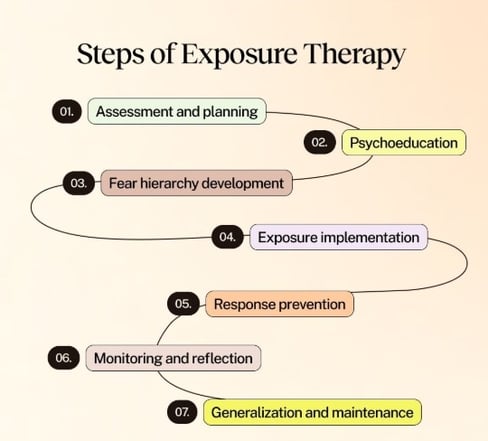
This is the gold‑standard treatment. It involves gradually and safely confronting the feared object or situation. Over time, the brain learns that the trigger is not dangerous. Exposure can be done in real life, through imagery, or with virtual reality.
CBT helps identify and challenge the thoughts that fuel fear. It teaches coping strategies, reframes catastrophic thinking, and builds confidence.
While not always necessary, medication can help in certain cases, especially social phobia. Short‑term use of anti‑anxiety medication may support exposure work.
VR allows therapists to simulate environments like airplanes, elevators, or crowded spaces. It provides a controlled, repeatable way to practice facing fears.
Breathing exercises, grounding techniques, and body‑based practices can help regulate the nervous system during exposure or real‑world encounters.
Phobias thrive in silence. When people talk openly about their fears, several important things happen. Open dialogue reduces stigma by showing that intense fears are part of the human experience, not something to hide.
Fear is universal. When phobias are discussed openly, they lose their sense of shame.
Many individuals live with phobias for years before seeking treatment. Awareness encourages earlier intervention.
Talking about phobias reminds us that fear is not a flaw - it’s a deeply human response shaped by biology and experience.
Understanding the nature of phobias helps partners, friends, and family respond with empathy rather than frustration.
Phobias are common, complex, and deeply human. They arise from a blend of biology, learning, and experience, and they can shape a person’s life in profound ways. Yet they are also highly treatable. With the right support, whether through therapy, education, or compassionate conversation, people can retrain their brains, reclaim their confidence, and rebuild their relationship with fear.
Understanding phobias is not just about understanding anxiety. It’s about understanding the human mind: how it protects us, how it misfires, and how it can heal. Everyone’s journey through unraveling their phobia is different, and KDH Counseling is here to help!

We are KDH Counseling, located in Lafayette, Louisiana. Here, we offer a warm, professional, and deeply supportive environment for individuals seeking meaningful relief from anxiety and related mental health challenges. Our team of licensed therapists provide a comprehensive range of services including therapy, medication management, and psychological evaluations for adults.
Our practice is staffed by a diverse team of therapists, each with unique specialties, who work collaboratively to tailor treatment to each person’s needs. Clients describe our therapists as empathetic, dedicated, and deeply invested in helping folks move toward healthier, more fulfilling lives.
Our mission is not just to help clients feel better in the moment, but to empower them with the insight, and confidence needed to thrive long‑term in their own way. For folks around Lafayette looking for a place where they can be heard, supported, and guided by skilled professionals who truly care, KDH Counseling offers a path forward, one grounded in expertise, compassion, and a genuine commitment to helping people live more balanced, grounded, and emotionally healthy lives.
Whatever path is right for you, we’re there for you, every step of the way.

Source Material:
Phobias and Phobia-Related Disorders - National Institute of Mental Health (NIMH)
Phobias: What They Are, Causes, Symptoms & Treatments
PHOBIA Definition & Meaning - Merriam-Webster
Phobias | Johns Hopkins Medicine
Phobia - Harvard Health

KDH Team : Mar 27, 2026, 4:33:38 PM
I chime in with a "Haven't you people ever heard of closing a goddamn door?"No, it's much better to face these kinds of things with a sense of poise...

KDH Team : Dec 31, 2025, 9:55:42 AM
Phew, anxiety, quite a loaded word. Beyond being a topic of much study and interest in the field of mental healthcare, it has become a trending topic...

KDH Team : Oct 5, 2026, 9:18:04 AM
If you've ever wondered whether you need a therapist, a prescriber, or both, you're in good company. More people are reaching out for mental health...