You might have noticed parts of yourself that don’t quite fit how the world expects you to think, focus, or respond.
These are often referred to as neurodivergent traits-patterns in how the brain processes information, attention, and sensory experiences. They can show up in conditions like ADHD, autism, or other forms of neurodivergence, but many people recognize these traits in themselves long before any formal diagnosis.
In daily life, this might look like overthinking social interactions, struggling with focus or organization, feeling overwhelmed by sensory input, or hyperfocusing so deeply that time disappears.
If you’ve ever wondered whether these traits are a strength, a challenge, or both, this article will help you better understand what’s happening-and how to work with your brain rather than against it.
A year ago by best friend was diagnosed with Autism. She is exactly like me; socially anxious, excitable, prone to overthinking and hyper focusing, and she struggles with anxiety. I remember thinking I must have it too. So I did some online tests, and it turns out that I do not have Autism. Some of the questions were true for me and I knew this
You might have noticed parts of yourself that don’t quite fit how the world expects you to think, focus, or respond.
These are often referred to as neurodivergent traits—patterns in how the brain processes information, attention, and sensory experiences. They can show up in conditions like ADHD, autism, or other forms of neurodivergence, but many people recognize these traits in themselves long before any formal diagnosis.
In daily life, this might look like overthinking social interactions, struggling with focus or organization, feeling overwhelmed by sensory input, or hyperfocusing so deeply that time disappears.
If you’ve ever wondered whether these traits are a strength, a challenge, or both, this article will help you better understand what’s happening—and how to work with your brain rather than against it.
meant something, but what exactly?
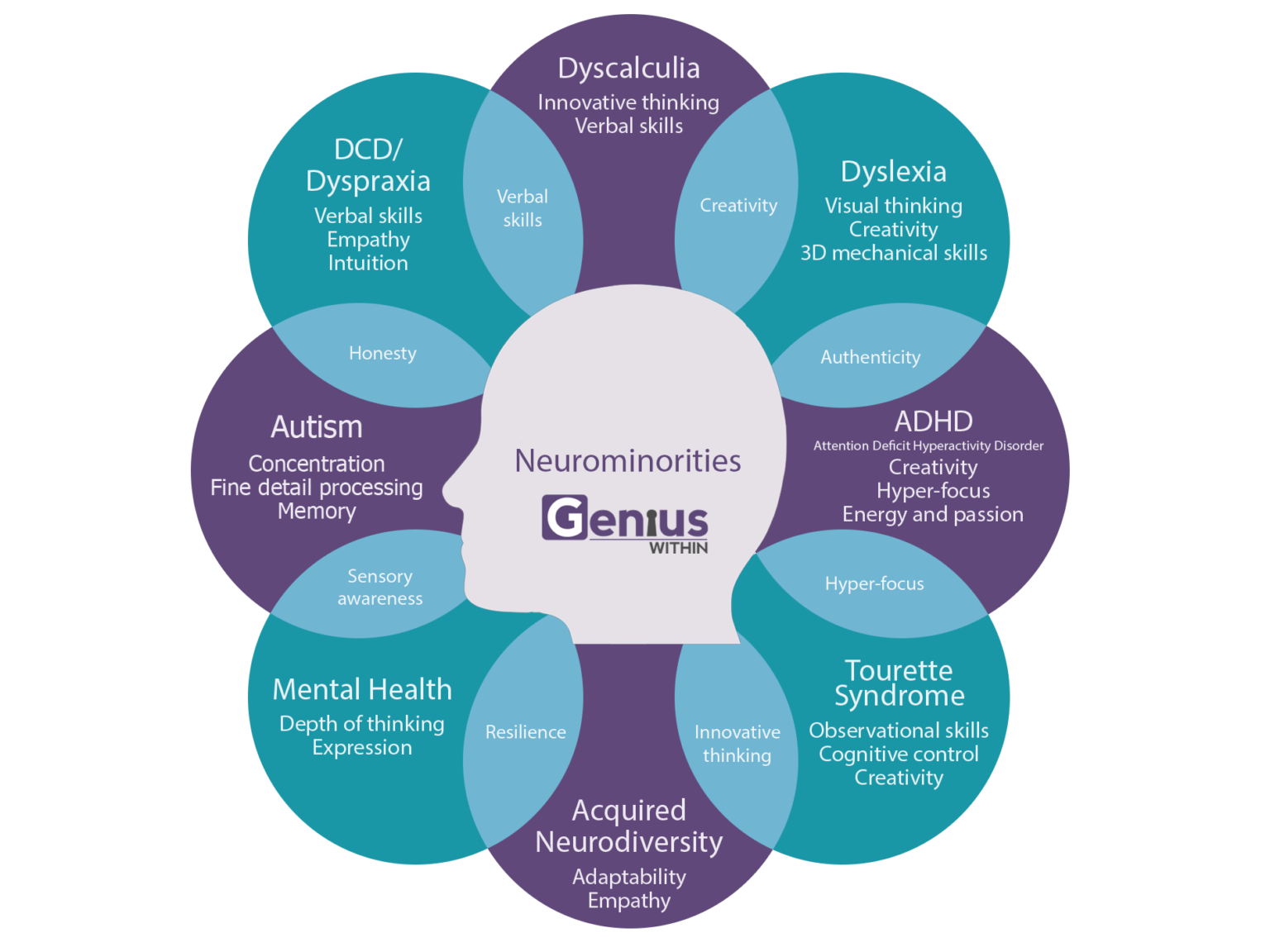
Once I referred to a client as autistic-ish and a doctor told me there's no such thing. But it's just not that simple.... this all has to do with Neurodiversity. For a long time I would see in my mind a cluster of traits occurring together that would signal that a person might have other traits in this area. It probably made my clients think I was some sort of genius but the truth is I would just see how traits and problems occur together. This allowed me to project and ask the right questions that fit the client's symptoms and provide the most accurate understanding to treat the client.
What Are Neurodivergent Traits?
Neurodivergent traits describe natural variations in how the brain processes information. This can include patterns seen in ADHD, autism, dyslexia, and other neurodevelopmental differences.
These differences often affect:
- Attention and focus
- Executive functioning (planning, organizing, starting tasks)
- Sensory processing (sensitivity to noise, light, or touch)
- Emotional regulation
- Social communication and interpretation
Rather than something to “fix,” these traits reflect a different way of experiencing and interacting with the world.
How Neurodivergent Traits Show Up in Daily Life
Neurodivergence is often most noticeable in everyday moments.
You might notice:
- Difficulty starting or completing tasks despite good intentions
- Feeling overwhelmed in busy or noisy environments
- Losing track of time when deeply focused
- Struggling with organization or follow-through
- Experiencing burnout from trying to keep up with expectations
These patterns can impact work, school, and relationships, especially when they are misunderstood.
Social Interactions and Neurodivergence
Social experiences can feel especially complex for neurodivergent individuals.
This may include:
- Difficulty reading social cues
- Overanalyzing conversations after they happen
- Masking or adapting behavior to fit expectations
- Feeling misunderstood or out of sync with others
Over time, this can lead to anxiety, exhaustion, or a sense of disconnection—even when relationships matter deeply.
Strengths and Challenges of Neurodivergence
Neurodivergent traits are often both a strength and a challenge.
Strengths may include:
- Creativity and innovative thinking
- Deep focus and passion for interests
- High empathy or emotional insight
- Strong pattern recognition
Challenges may include:
- Burnout from sustained effort
- Difficulty with transitions or structure
- Sensory overwhelm
- Self-doubt shaped by past experiences
Understanding both sides allows for a more balanced and compassionate view of yourself.
My Own Neurodiversity
ADHD Symptoms: hyperactivity, concentration problems, hyper-focus, rumination, social anxiety, high levels of empathy, and detail aware along with pattern recognition.
I always knew that I was different, I talked faster than most people, I'm easily excitable, I've been told, that I'm a lot. I'm riddled with sensitivities in social environments that has consumed so much of my headspace. Along with all these traits I also have a repetitive part of my brain that can hyper focus on subjects. This is how I am Neurodivergent. These traits have presented as social anxiety, obsessive anxiety, and life of perfectionistic living to escape my inner turmoil.
For most of my life, I compared myself to Neurotypical people looking for acceptance, to fit in, and ultimately break the feeling of loneliness that accompanied my childhood and teenage years. This loneliness was due to some of my neurodivergent deficits one might say. My relationship with loneliness did not end when I found people to connect with on a deeper level in my 20s. I still had memories of the loneliness in my body. My mind remembers things like photographic memories even of emotions. It is probably another neurodivergent trait. But belonging to a group of friends who accepted me, changed my life completely.
Learning the neurological way that my brain functions has allowed me to completely accept the biology of me. This is the innate way that my brain experiences the world. As a trauma Therapist, it's easy to get caught in the trap that all things are related to trauma. That all mental health issues go back to some traumatic event that happened in your history. This philosophy and way of looking at mental health is very helpful but does not encompass or take into affect the biological way that we exist in the world.
Support for Neurodivergence at KDH Counseling
My development has increased 10 fold by embracing and taking a deeper dive into myself and into trusting who I naturally am! None of my strides could have been made without trusting myself and honoring who I am biologically. Seeing the benefits of my biology, and then making changes due to my own biological sensitivities.
What are your strengths that you have been looking at as a deficit? How much of your mental health is actually due to the way that your brain biologically responds to the world?
It all starts with self acceptance? Let's start by accepting your biology today! If this is upsetting it just means you are the part in the journey of grieving. Grieving our otherness takes time and the right therapeutic space.
Understanding your neurodivergent traits can be an important step—but knowing how to work with them is what creates change.
At KDH Counseling, we provide neurodiversity-affirming therapy and psychological evaluations for ADHD and autism in adults. Our approach focuses on helping you understand your patterns, reduce overwhelm, and build systems that support how your brain naturally works.
We offer services in Lafayette, Louisiana, with both in-person and telehealth options available.
If you’re exploring your neurodivergence or looking for more clarity, you can learn more about our services or schedule a consultation.


 KD HOLMES, LPC, EMDR CERTIFIED, BTTI TRAINED : Nov 29, 2024, 3:00:53 PM