KDH COUNSELING / ARTICLES & PODCASTS

A little more understanding.

Conversations and articles from the people behind your care. Start with a topic that feels familiar.

KDH PODCASTS

Listen & Learn.

A few thoughtful conversations to help you explore. Watch at your own pace, read an episode transcript, or follow a question into our articles.

6 conversations

ADHD · 23:02

Making sense of ADHD.

A conversation about ADHD, motivation, and practical ways to understand everyday patterns.

With KD Holmes & Monet David

Episode notes & transcript

Monet and KD explore ADHD, its history, and how it can show up in motivation and daily life.

How does this connect with ADHD coaching?

The conversation offers background on ADHD. Coaching at KDH is a separate, practical service focused on goals, routines, and follow-through; it is not therapy.

Where can I learn about the coaches?

Monet David works with adults, and Rebecca Henry works with teens and adults. The ADHD Coaching page introduces their approach and current roles.

Episode transcript

This conversation was recorded earlier. Visit Our Team for current credentials and services. The transcript follows the recording and may contain transcription errors.

Welcome to KDH Counseling's Leaning into Therapy series where we explore therapeutic approaches and evidence-based protocols to give clients the most comprehensive understanding of therapy. Our goal is to empower clients with research-based interventions so they can make informed choices about their treatment. Join KD Holmes, a licensed professional counselor with 16 years of experience and her team of clinicians as they share their expertise, insights, and therapeutic interventions. Get ready to delve into the world of therapy in this series specifically designed for clients by therapists.

Welcome! We have not done one of these in a while so KDH Counseling presents Leaning into Therapy which has been a really long time since we've done it. I am KD Holmes, a licensed professional counselor, and I'm here today with... Hi, I'm Monet David, also a licensed professional counselor. And today we're going to dive a little bit into ADHD. So attention deficit, yeah, it's ADHD, so it would be attention deficit hyperactivity, right? Yes, yes, and you bring up a good point, it's a mouthful.

It really is. And did you know it's gone through like several iterations of labels? Did you know that history? No, I love this. Tell me. Okay, so and my brain doesn't allow for me to remember a lot of information so I'm pulling up my little cheat sheet. I'm actually writing a blog about this so be sure to look out for the blog, especially if I'm saying stuff and you're like, this is really good but I can't retain it. I hear you.

And I like to bring up this fact about ADHD when I do psychoeducation with clients who have ADHD because all mental health has stigma, but it feels like ADHD has an even more so tremendous amount of stigma. And I think it's nice to have like a target to point to because when it was initially labeled, it was called defective moral control. Oh my gosh. I know, like, hmm, your morales are defective. There's something wrong with you, right? It then turned into minimal brain dysfunction.

So we were getting closer in that it was about the brain, but like minimal brain dysfunction doesn't also land very well. It then became hyperkinetic disorder of childhood before they finally landed on, it was attention deficit disorder. Now we just combined it attention deficit hyperactivity disorder, which is still a mouthful. And guess what? They still haven't landed on what it really is because it has nothing to do with attention and everything to do with motivation. And so the misnomer behind that is, oh, people with ADHD are just like out in the clouds.

They don't really have an attention span. When we know, like when you actually survey somebody with ADHD, they have hyper attention. But it's all, it all goes back to, they have to genuinely be interested in the topic and who's genuinely interested in sitting for eight hours a day to learn a bunch of different things in school. Not me, right? I know. Yeah. So it's, it lends itself to the idea and the theory that we've talked about in our own practice amongst clinicians of the interest-based nervous system.

So like the things that don't interest us might as well not exist. And the things that do, we want to do them 24 seven. So I think that the jury is still out. Russell Barkley is kind of the preeminent scholar for ADHD things, all things ADHD. And I was lucky enough to take one of his classes for my training that I'm pursuing. And he kind of talked about the ins and outs of like how the DSM, the, the book that we use to diagnose people is still not hitting the target with ADHD.

He contributes and he made arguments for and against the criteria, but there's still room for improvement in the ability for us to be able to catch people and diagnose people appropriately and accordingly. So it's a work in progress, ADHD, I guess, in a nutshell. I love this. It's a lot to it. There's a lot to it and why. So I think my biggest, not quorum with it, but my biggest thing when it comes to this is why is it important in therapy?

Oh my gosh. Well, it's a neurotype, right? And we're all geeks about neurotype at this practice because you will also have a blog coming out soon that delves into this. If we don't account for neurotype, when it comes to clinical approaches, then we might as well just be like shouting into the abyss, right? All the techniques that we have have to consider neurotype and neurotype is exactly what it sounds like in that it's about how your brain functions and how it exists in this world.

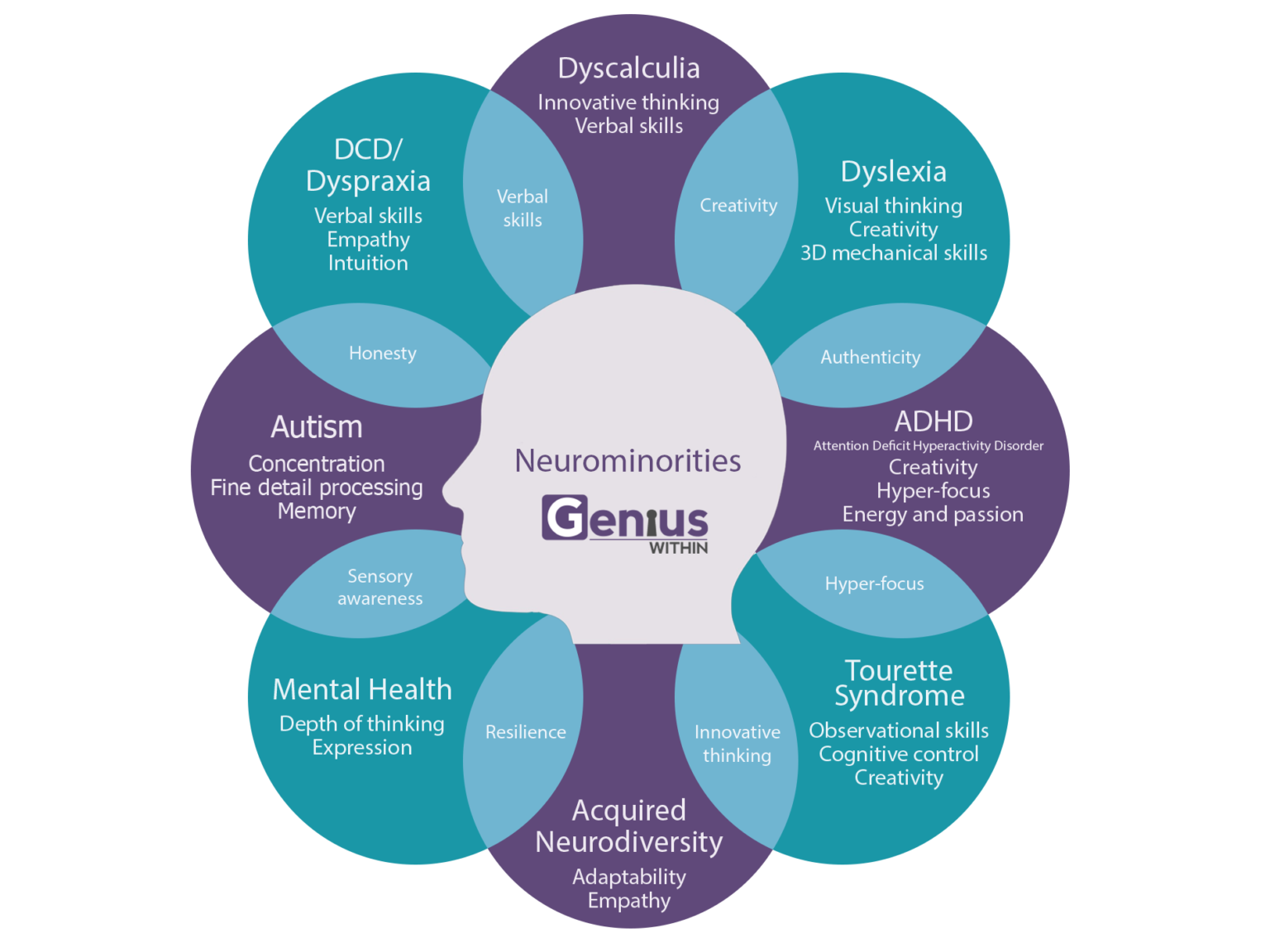
And so we like to provide again, going back to that psychoeducation piece. So much of what we do is education before we even get to the therapy part is explaining to people there's these classifications. So there's neurotypical people. So these are people without the diagnoses of neurodivergence. And then the umbrella of neurodivergence being autism, ADHD, sensory processing disorder. Sometimes OCD gets in lumped into that. Sometimes schizophrenia, dyspraxia, synesthesia. These are all things to do with the brain and how the brain takes in information and stimulus.

And so without neurotype, without those considerations, then we're doing like half the job that we should be doing. And so it's so important to know if a client is neurodivergent or not in when factoring in therapeutic goals and treatments. So I'm thinking like the textbook example, what I've heard from clients in the past is like other therapists have conceptualized something as simple as making eye contact during session as indicative of a client being committed and paying attention in session. What we know about neurodivergence is that sometimes stimulus as much as like eye contact can be really off-putting and distressing and honestly is counterintuitive to paying attention because they're working so hard to make sure they're making the right amount of eye contact.

And so just that alone can disrupt the efficacy of services, right? Like if I'm fussing at you because you're not making eye contact with me or because you're having to look up every time you answer a question for me, I'm not a really good therapist. Like I'll just say that. So we'll agree. I think it's the way that we attune to them and it's including differences. So, okay. So how does eye contact relate to attention to ADHD? How is eye contact a part of that presentation?

Because I don't look at people. I have ADHD. Yeah. Don't look when I'm talking. And often my clients will see, they'll look around the room to see what I'm looking at. And I'm like, I'm just thinking, I'm gathering my thoughts. And if I look at you, I am thinking about looking at you and not about what I want to talk about. And so I wonder what that exactly is in ADHD. There's a fancy schmancy fancy schmancy phrase for it. It's a responsive inhibitory response.

I'm doing a bad job of using the phrase, but there's Phrase basically entails like the struggle with ADHD is that you're taking in a bunch of stimulus all the time and you are hyper aware of every single stimulus. So it is an act to focus solely on what you feel like you need to be focusing on. And so I actually broke this down to a client last week where I'm like, you're not just sitting in this room, hearing me, you're sitting in this room, you're feeling the temperature of your body, you're noticing that my lights are on above you, you're noticing that there's a bright light coming at you from my window, you are hearing the sound machine, you're hearing me talking, you are acutely aware of how it feels to sit on that sofa.

And all of that is hitting you in the same degree. But you know that you need to be giving priority to what I'm saying right now. And that is a struggle sometimes. And so like, close your eyes if you need to close your eyes. Let's use our weighted blanket if you need to feel grounded in that sense and not feel so overstimulated. Does that make sense of that track? Like just the effect of stimulus on a person? Well, and I always see it as like all stimulus is equal in our brains.

That's how I interpreted it, but our brains can't differentiate what's more important than the other, the sound in the hall, the sound in this room, like it all feels just as important. Yes, yes, the discernment. Yeah, so it makes a lot of sense. And so if you have a client struggling, and so they come and they say, I'm anxious. Well, that doesn't really mean anything if you don't look at where it's coming from or what's at the root of it. Yeah.

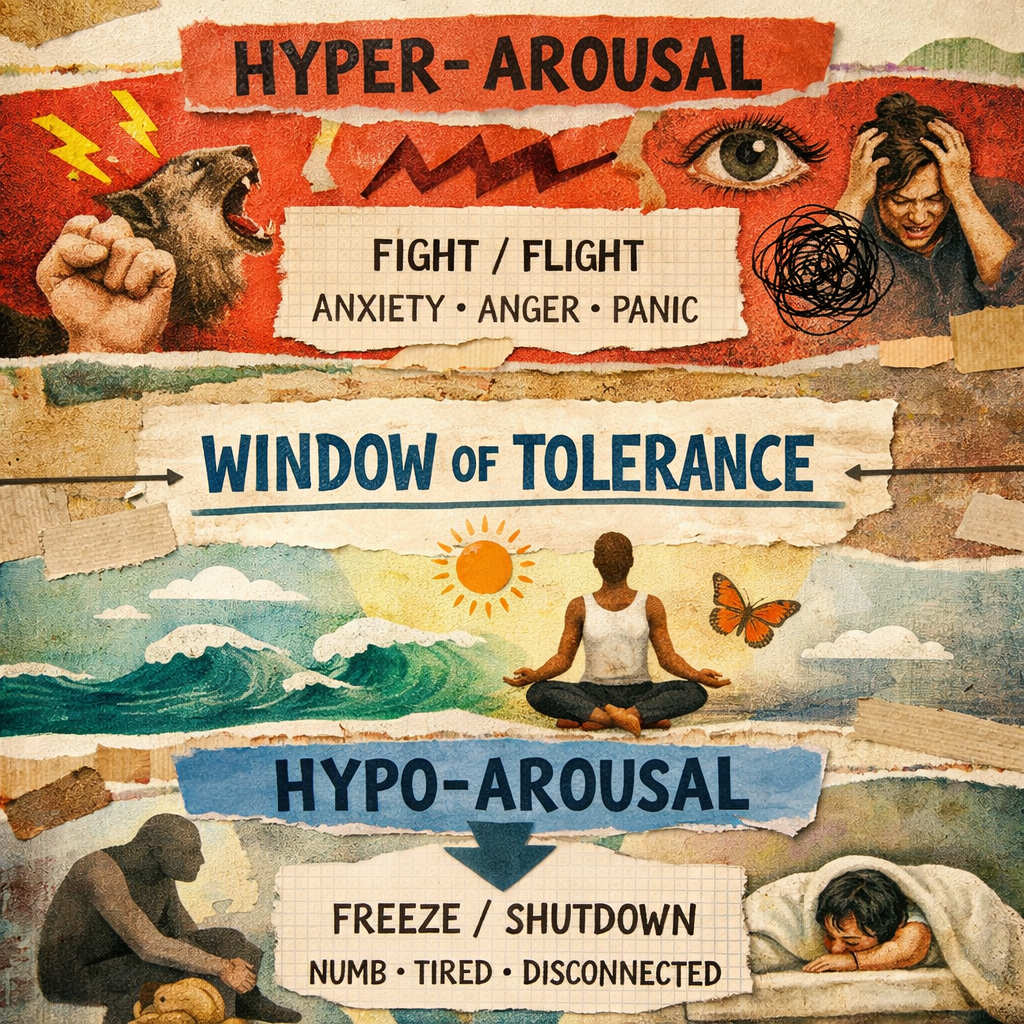
Absolutely, yeah, because it doesn't take into consideration what's contributing to that anxiety. And then ADHD is very much tied to the nervous system. We can often find that our clients have been dysregulated for long periods of time. And from that dysregulation, they have impairment and dysfunction in their life because they're just like constantly in fight or flight. And then everything else kind of starts to go to the wayside and they're often really desperate for relief from that. So it's so important to consider neurotype and if the presence of neurodivergence is there.

And sometimes the client won't have that answer. Sometimes we observe it first and then we start like, have you ever considered this? Did that ever factor into your conceptualization of how you exist? And more often than not, they're like, yes. And then that ends up being a fun thing to process with them. Well, and I think that good therapy, I don't know if that's the right way to say it, but will include these differences, not to pathologize unless it is a problem, right?

But to inform how the person experiences the world. Yeah, a hundred percent. And I think that's what we do really well in our practice is that we do avoid pathology, a conceptualization of like this being, oh, the autism's the problem or oh, ADHD is the problem. No, not at all. It is a part of who you are just as much as my blue eyes are a part of who I am. And it's often the world, not often, it is always the world that we live in that is the problem because it expects you to exist in a very specific way that just knowing what we know about biodiversity is not realistic, but we are so committed to a neurotypical world.

And what I mean by that is just expressing certain behaviors, existing in like having certain etiquette. I don't know if I'm doing a good job of explaining it or not, but like- Oh, like sitting at a table, putting your hands in your lap, right? Yes, making eye contact, not moving too much. Cause if you move too much, why are you moving? Are you anxious? Why are you fidgeting? You have to exist in a world with the fluorescent lights. Whitney made a good point of like, why do we agree on those being like the most common type of light?

They're so offensive. They're loud. I call them homophobic lights now. I'm like, please turn them off. I hate them. Yeah, yeah. So it's like, oh, and you have to go to school and often schools are full of kids and it's super loud and you just need to get on and go on and like not be bothered by it. And yeah, so it asks a lot of you. I know, I know. And these are things that in an ideal world, yes, we would love for them to change, but they probably will not be changing anytime soon, but we can change our thinking about it and how we view ourselves based on that, right?

Absolutely, yeah. So it always often like manifests as like, these are the presenting concerns. We often as clinicians say, ooh, I wonder if there's some neurodivergence at play here. We process that, we provide psychoeducation around why we suspect it to be that way. And then we acknowledge like the world is unfair and unjust. Then we move on to what are we gonna do about it, right? Like, so it's always about building efficacy, building trust in oneself and accommodating, which is like, it feels weird to say, because I don't want to minimize the experience and how distressing it can be being neurodivergent in a neurotypical world.

But I love the creativity around adaptations or like life hacks or cheat codes for life. Cause it's not dumb if it works. And when we land on something that works, it's such a light bulb exhale moment for clients that it's very rewarding as a clinician to be a part of that process with them. So give me some life hacks, I like this. Ooh, so what we know is has been effective for ADHD. It's a issue with motivation. They know everything they've got to do in life, but it's the doing that gets in the way, right?

So they're not dumb, they're not lazy. It's not that they don't know. It's just the, I gotta get up, I gotta start the task initiation of it all. So some things that have been helpful with clients is to gamify tasks. So I really center my practice on late diagnosed or just adults with ADHD. Okay, so up until this point, they've kind of managed pretty well, but then we get the privilege of all the adult responsibilities. And so sometimes executive dysfunction is compounded because you went from being a kid with very little responsibility to an adult with I gotta maintain a household.

I gotta take care of a child. I got a husband or a wife that I have to be present for. So dopamine is crucial to ADHD because what we know about the ADHD brain is that it does not produce dopamine in the same way that a neurotypical brain does. It is harder to produce. And when it does get produced, it doesn't have the same oomph. So a neurotypical person can write down a task they're going to complete, do the task and cross it off the list and they get a dopamine hit.

Oh my God, a sense of achievement. I'm rocking and rolling. It does not work that way for people with ADHD. It is not effective in that way. But to gamify things, to make them a game, to give yourself points to have a reward at the end, does work for some reason. It elicits the dopamine response. It's a better dopamine response. It's creative. You can kind of pick the reward that you want for yourself. Body doubling is really helpful. So I say like, if you've got a partner at home, ask them to initiate the task and then join in with them and you will see how much easier it is.

So in my own home. I will initiate the task. Often it's the dishes and then my partner will join in. Like, but if I asked him like, hey, go do the dishes. I mean, he'll do them, but like the timeline is extended much greater than if I were to initiate for him. And so that's kind of body doubling. I have clients who are maybe single. And so I'm like, invite that one friend over that you know is good for it and say like, I just need help getting started.

Can you help me? Can you fold clothes with me? That seems to be really effective. And then finally, I like to really promote outsourcing. So if there are things that are just like, I do not have the wherewithal for it. Can we pay somebody to do it? And this can be as informal as paying a friend to do it or as formal as hiring a maid service or cleaning service. Like there is no shame in that. There's a reason it's a profession.

There's a reason it exists is because people are using it. So like, don't get caught up in the thing. And then overall, it's about adjusting expectations. You've received the message for so long that you need to exist in a neurotypical way. You have to divorce yourself from that. Just creating a list of tasks is a task in itself and that counts for something. So you get to put the pin down and that can be all you have to do for that day.

So it's almost like deconstructing expectations if that makes sense. Yeah, I think that the last part when you talked about those expectations, there's a lot of what I do with my clients is like they have so many expectations that they're failing in some sort of way because they're not doing X, Y, Z, whatever it is. And so normalizing that and creating more reasonable expectations that they can feel proud of. And it might just be, we did the scheduling for today. Let's put that aside.

Awesome, got it. I know for myself, as you were talking about it, I can't rush. I don't know if I'm do well on time, like telling how much time things takes. And this is a common thing with my clients. And so I used to always be late and it would make me crazy. Like inside I would be anxious. I'd be anxious when I start my day. And once I get anxious, that's it, I'll be anxious for hours. So for me, I make sure I have plenty of time so I can get caught up talking to somebody and it's not the end of the world.

Things take way longer than I expect them to take. And so having plenty of time just makes my day go so much better. I talked to my clients a lot about that one and memory coach. Every time I get a memory coach, I find those super, super helpful. So like if I've had a client who misses appointments, they have a family member who reminds them of their appointments. And I think old me would have been like, there was a judgment, like, no, you need to remember on your own.

Well, some of us just aren't good at remembering those things. And that is not the end of the world. If that's your worst problem, let's not get hung up on that. Just somebody that we send the reminder to who's gonna remind you, no big deal. Yeah, I think as therapists, like being open to figure it out with them is good. Absolutely. No, that's what I'm saying. Like if it works and it works in your life, it's not dumb. No. And I think a really like important part of therapy is to not stop at, well, this is just how my brain is, right?

There is a crucial, like we need to understand, yes, this is how your brain is. And yet you still have to exist in this world, right? And I think about the example recently, it was kind of in the news where this young person, probably neurodivergent, whether it was ADHD or whatever, they're like, well, I have time blindness. So the accommodation that work will give me is that I can be late for work. No, it can't be, it's gotta be on you.

It is not your fault that you're a neurodivergent and really we don't wanna look at it in those terms, but it is your responsibility, right? And so a better accommodation is to let them know, man, I struggle with time. I'm gonna do these things to help me make sure that I show up on time to work, just to work with me on that, please. I'm gonna make my best effort to make sure that I'm doing what I need to do. And so it's this give and take of being accountable to yourself, giving yourself grace and having to exist in a world that expects a certain level from you.

I love that. Yeah, yeah, it's a challenge. And having the right support, because if people, I mean, I'm thinking of the history of it, right? If it was originally considered a moral failing. Yeah. I mean, that is so disturbing on so many levels, but we still have the roots of that in our thinking about it. And I know my clients that come have a lot of shame about their ADHD. Like it's their fault, they've missed it. If they can only get it right.

And so even sharing about these things, like I can't make it to work on time, is difficult for them, because there's a wrongness already in what they're sharing with us. So as therapists, if we can be, make sure you have a therapist that's warm and understanding about it to help you and hold you accountable through it. Very, very powerful. I love that piece, Monet. Yeah, I think so too. I think the therapeutic relationship is the perfect relationship to practice these things, coming to therapy, right?

So there's a planning involved. There is a showing up on time situation involved. There is a follow through with recommendations after the fact. So it's a good practice site. And then you have this person, if they're well-versed, that can understand if there are issues in any of that, and can work with you. And so, I mean, we talk about it a lot. If they're enacting those behaviors in therapy, they're probably doing it in other parts of their lives, right? And so it's on us as a therapist to really confront that, obviously in a therapeutic way, but just to, hey, I noticed you've been arriving 10 minutes late every single time the last three sessions.

Like, do you struggle elsewhere to show up on time? And how is that affecting you? Some people, it's not of value for them. And can, yeah, can we unpack it in that motivational kind of way? Like there isn't motivation, like maybe they don't care about being on time, right? Like it might not be a value, not in a mean way, but just like, it's not a value for them. I like that, man. Okay, we're gonna do more on this. It's super, super interesting.

I think it's showing me ADHD is so much more than attention, susceptibility, hyperactivity. It's a lot more, right? And treating our clients or the individuals that come to see us in this way, very, very powerful. Very. Last words on this, Monet. There's no cure. Anybody who's selling a cure is a snake oil salesman. But there is adaptation and things can get better. Because oftentimes by the time they cross the threshold for therapy, it's really dire. And so I like to instill hope that there are proven things to help with this.

And so it can get better. With the right kind of help. That's my thing I've been saying lately. The right kind of help that's informed. All right, so we will have more later. Yay. Bye.


Sensory differences · 27:44

Sensory differences & mental health.

Explore sensory profiles, neurodivergence, and the demands of everyday life.

With KD Holmes & Erica Thibodeaux

Episode notes & transcript

KD and Erica discuss sensory experiences and their relationship with mental health. For individual support with sensory needs and everyday routines, explore occupational therapy at KDH.

Read the episode guide ↗

Can an ordinary workday feel like a lot?

In this conversation, KD and Erica describe everyday demands such as interruptions, fluorescent lights, and the hum of electronics. The useful question is how those experiences affect your own day.

Does this video tell me whether I have a diagnosis?

No. This is an educational conversation. An individual evaluation considers your own questions and circumstances.

Where can I ask about support for daily routines?

Our occupational therapy page explains Claire Derge’s work with teens and adults, sensory differences, and everyday routines. The intake team can help you explore whether that service fits.

Episode transcript

This conversation was recorded earlier. Visit Our Team for current credentials and services. The transcript follows the recording and may contain transcription errors.

Welcome to KDH Collective's Neuropod, a journey where we delve into the intricate world of neurodivergence within the therapy room. Join KD Holmes, a licensed professional counselor with 16 years of experience, and Erica Thibodeaux, a seasoned licensed professional clinical counselor, as they wholeheartedly share their extensive expertise, personal encounters, and therapeutic insight. Our aim is to foster greater understanding and appreciation for this remarkable population. Hey everybody, welcome back. Today we're going to be talking about sensory profiles and the spectrum of sensory needs that we see in neurodiverse patients and clients.

I'll just jump in with my first introduction so we can save time. Into this is getting trained in the play project, which is an early intervention for autism and we just took each child through basically a questionnaire working with their family to figure out how do they experience the world through their senses and where does that experiencing become a symptom that stops them from functioning or is, you know, becomes a symptom basically, or a behavior that is interfering with their life or yeah, I don't want to make it only pathological because sometimes it's just about comfort.

Sometimes it's about soothing themselves. And so basically they looked at how they like auditory processing, proprioception. So did they need to move, rock, swing, jump, Um, where was their body and space? Um, yeah. Some others, let me think, olfactory smell, did they avoid smells, did they, um, go through the world seeking smells, vestibular, uh, with here, you know, basically their balance movement, um, touching. I had a child who like licked their way through the world, really experienced the world through taste.

Yeah, what comes to mind for you, Keisha, with this? Well, just when you started talking about it, it's like difference. I look at it like a spectrum, you know, me, my black and white brain. So like a spectrum on one end is difference. And then on the other end is disability or dysfunction or whatever you want to call it. Right. And there's all these points in between. So sometimes it's just a difference. It's just a preference for how we live. and sometimes if you have this intense sound sensitivity, it becomes like assaulting to your nervous system and will actually create symptoms of depression and anxiety.

And so then we get into dysfunction or disability or whatever you want to call that, but just that line of difference. And I think as therapists, you know, it's our job to help. You know, our role is when people are struggling to figure out how these differences might be contributing to their mental health and whatever they're coming to us for, and then how do we help them? We're not there to just be like, oh, okay, it's a difference. Great. Let's move on, right?

If it is creating dysfunction, we are going to want to help them with that. Yes. And I think that this is because the spectrum is so broad and wide, we have the range, you know, in the range of dysfunction is avoidance and seeking. There's a spectrum within a spectrum inside of that range. And so I think that it can really be helpful to tell the story. So if we're talking about adults and adults who may or may not already have a diagnosis of neurodivergence, but you're noticing patterns in their avoidance or in their behavior, maybe their risky behavior, or you're just noticing patterns that there's a deeper story and it might be a sensory story.

And actually, you really helped me personally notice some things. One of the biggest things is that I would have one of the hardest times of my day was after driving home with kids in the car. And you're like, Erica, it's overwhelmed. I really think it's overwhelmed. I think it's overwhelm. I think it's sensory overwhelm. And I was like, wow, once I noticed what was happening in my body in the car, and it would be like an audio book on with the kids construction, I'm, I'm processing the day, all these like sounds, so many sounds actually splitting my attention.

And what I really noticed was repetitive sounds from one of my kids, and it would just like, ramp me up, ramp me up, ramp me up. And so I started doing this thing where everyone gets out of the car, I take a few minutes, go inside, because what would happen is like, we'd all melt down like right the minute we got in the door, which is a really common neurodiverse behavior, you know, it's a human behavior, but it can get really intense with people who are overstimulated with certain sensory overwhelm, you know.

And I want to add to that. And I think that part of like what plays into this is a good parent does XYZ, right? So you get in the car, you know, you have this sensory sensitivity, but you're like, I got a list of my kids, right? And they're, I mean, I even know when my nieces and nephews are in my car, I'm like, please turn off the devices like y'all or make it makes me crazy. That's on the radios on somebody's talking to me, another person screaming in the back, it's a lot.

And that's not to mention what I'm visually picking up as I drive. Um, and so I think those like those, I want to say it's like vying for attention or like values driven kind of behaviors. A good parent, a good caregiver listens to their kids. It will override what is best for our nervous system because we want to be there, right? And we don't even think of how it's affecting us because we want to be there for the kids, right? That's most important.

It becomes an absolute. And so I think, you know, when you're trying to pick this stuff apart, sometimes it does take an outside person to be objectively, like looking at it like I did with you. Right. And it definitely was the sound thing. So I use this example. It was the sound, yes. And the splitting of attention of like, like kind of the visual stuff too, like you're looking, looking, looking, but then there's a repetitive sound happening. You know, and the day after we talked about it, I just observed in the car and my son was like clicking a pin like over and over and over.

And I was like, Oh my gosh, I, I really like I'm with every click I like, it was like mounting and mounting and mounting. But I was like, I am I am not going to say a word. You know, but I mean, it was just like a little trial like it was just a little observation smells it there's so many things, but some people move towards these things. Like there's a such a stimulating experience in the body with these sensory experiences.

And I think when I take someone through a sensory profile, sort of curiosity or questionnaire, sometimes it's a formal questionnaire, sometimes it's curiosity. Some things they'll seek and some things they'll avoid, you know, so it's never even like one, one type of profile per person. Well, and no, so I am, since sensory seeking, I can't have repetitive stuff. But when I get in my car, the music is so loud. Like when my God gets in the car, he's like, ah, like Keisha, turn it down.

Like it is blaring and I like 150 beats per minute. So it's like, boom, boom, boom, in my car, and I'm jamming out. Um, I could do that almost every time I get in the car, but you put a bunch of different noises. It's too much. It's kind of fascinating how Yes, Keisha, and you know, it's interesting because, because of our long history together. So I will say this, I noticed with teens that tend to be more ADHD type symptoms and behaviors.

They will like, get like their big headphones on with like blasting music and like goes on the swing set like as fast as can be or like one of them that I knew mom was the client and I was really helping her like, I think your son needs an assessment. he would like rock with his like music blasting, you know, he was like in his rocking chair that was like the rocking chair that she had like rocked him in as a baby.

And that's interesting because it's like an overwhelm of certain senses, right? I remember as a teen, young adult being in the car with our friends, with you, and I'm like the one in the backseat who's like, like everyone else was enjoying how loud it was and I was just like, you know, like, no, I remember I mona, it was Monique Monique would be the microphone. It was a pretend microphone, but yeah, yeah, sensory differences. Well, and also, so one of the things just for any clinicians listening, that I think is so often what can come up in relationships is just different sensory experiences, needs, requirements, comfort levels, rubbing up against each other in a household or in a family.

I love that you say that because so we're talking about differences. And maybe they're they're going into some sort of disability. But I think most of the people we work with are, are adults that are functioning, right? They're like in their life, they're struggling a little bit. But there are some people on the spectrum who this is like very incense. And it becomes, you know, where it's like, the sounds are so assaulting to them that they scream, they might even break someone's arm or the smells or the chewing.

Like if family dinners break down every day, maybe someone has a sensory experience that is like overriding. I have, you know, So one of the things that I think is important to remember is the more able someone is, the more they can mask and the more they can suppress. But what's happening at home when they're exhausted, they are tired of doing that all day. Do they have anything left for their personal life, for their family members, for their children if they're a parent?

And that's where I really see it becoming dysfunctional because if they're exhausted by the interruptions, the sounds in their office place, the fluorescent lights, the hum of electronics, because these are all things that will really come up in sessions. And, you know, a lot of people got a break during the pandemic if they did work at home in their own controlled environment. And then going back to work has been, I would say, a difficult couple of years for some people who were like, this is what I've always wanted.

No social engagements and like complete control over my environment, you know, but that it turns out, you know, we've all opened back up in the last couple years. So it's interesting because I think the more functional someone might see when they're coming in our door, if this isn't play, it's like they can be really depleted from having to pretend or mask or suppress all the time. And let's describe what masking is. I mean, I think most people know nowadays, but masking, how would you describe it?

I describe it like this, it requires a lot of energy, a lot of energy and not all people think it's a curse. Some of my clients think it's a gift that they can do this. Yeah. A talent. They show up in a certain way. I mean, I do it. I'm hyperactive. But when I'm a therapist, I am not hyperactive with my clients, you might get moments where I like will be me, you know, and just kind of like, or I'll laugh or whatever.

But generally, it's like, I'm very controlled. Yeah, you have like professional counselor Keisha. Yeah, I'm tracking my client, whatever they're showing up as, that's how I am. I feel like it's a very constricted way of being for me, but it's required for me to be successful at my job. And it does require a lot of energy. And so I think people on the spectrum, often they can be more social or they can do things like that, that aren't natural for them, but as a way of like coping and living in world not made for them.

They can do things and it does require more energy. It's not natural. It's not like a natural, authentic way of being. Yes. Well, and I think that, you know, the way I've heard, I described this, I think in like our first episode, but someone in my office described it this way. It's like they have an operating system that requires a secondary operating system to interact with everyone else. So they're, you know, they're, this whole human interaction thing wasn't, they were not made quite for it.

So they're having to run this like other program and it like slows everything down or it like exhaust the system. Because they're, they're running out of steam to run two operating systems instead of just the one that's them, you know, and think about racial differences. So then add to that, maybe some racial differences that come in. I mean, that's a whole, then that's a third operating system. Cultural differences, even like gender expectations. Absolutely. There's so many, there's so many conditioned like systems, I think, placed on people.

And then, you know, already we, we know that in these systems, people are switching, like what you just described, you know, you switch into this different, You know, code switching into this different view at work. And I think that a lot of people are exhausted by that, whether they have a diagnosis of any type of neurodivergence or not. But it's particularly taxing when several systems don't work, right, for the person. They have to mask in several different situations or environments. or when home is not easy.

Yeah, add that to it, man. Because I will say working with family members of people who are living with nerds who are neurodivergent. The home is like the safe place and then home is where they kind of let it all out and I will call it melting down. So they come home and there's a meltdown. And I see it, I hear it from parents of teenagers a lot, like they're fine at school. They're wonderful, all the stuff. And then, and you hear it when they're younger, right?

We hear this in like toddler age and everyone's like, it's normal. But then when they're doing it at 13 or 14 or 17 and the meltdowns are really big or they're an adult and the meltdowns are really big and all they can do is like go off in a room and be like completely quiet in the dark. it can really weigh on their relationships, you know? Well, and I was thinking, as you said, meltdown, so there's like that hyper where people might scream or be more expressive.

And then there's the hypo, which is what I see more of, that shutdown, where it's like the nervous system. And sometimes, you know, it can be bothersome for families and other times people think they're fine. They're like, but they're not. Totally. Yeah, they just spend a lot of time by themselves. Well, that's cause they're shut down. They're literally like in their room, like steam coming off their head, like just trying to cover from the day. And more verbal interaction is just exhausting.

And especially if they're a parent or they have a spouse who, you know, sometimes I'll see this like someone who works in a problem solving field, they're solving problems all day long. Their spouse perhaps doesn't work outside the home or needs more social interaction, that person comes home that the spouse is just like ripe and ready for connection. There is a whole mist, a mist like rhythm, like they're not able to connect and a join and plug into each other. And that can be really stressful and hard.

Which is kind of, it's making sense what you're talking about. It's like this idea that these sensory, how we receive stimulus or information stimuli from the environment, how our body actually receives it, and how it gets excited or recovers from it affects how we show up in our relationships. Man, we're going to do a deeper dive on each of these, but I think the general theme here is that some people can be sensory seeking, some people can be sensory avoidant, and we can be both in the same body.

And because of- Because of an R, yes. Yeah, because of these differences, I think it makes it, oop, you hear that? Sneezing in my next room, in my office. Some background ambiance. Yeah, just a little bit. But it can affect how people are showing up in their relationships and what we're seeing in our office. right? I even think it affects how people cope, right? Like effective coping is rooted in these differences and understanding this on a much deeper level than I think we normally do as therapists.

Yes. When you discovered the sound thing, how much therapy had you had up until that point? Years, lifetime, not even kidding, five years old on. I mean, never given a neurodivergent diagnosis because I use, I coped through chemicals until I got sober to turn it all off and to overstimulate my system too. Lots of stimulants and depressants. Which makes sense. Yeah. So this is another thing I'll hear sometimes I've heard it from a few male, male clients. They're, they're either on or off.

Like they're either high intensity and their partner is complaining because they're too much they feel like they're too much right and they're bothering their partner they're an annoyance or they're just like off and they're kind of numb and they're there's just like a shutdown and it's hard you know I've heard this actually three three different people are coming to mind it's just like hard to find that middle area where their spouse lives and So they're on these ends, swinging from end to end.

And the spouse is like in this whole middle area and they just like can't seem to overlap. Well, and think about how we traditionally look at this pattern. We're looking at it through attachment styles, avoidant attachment, angst attachment. We're like, oh, he's ping ponging between the two. He's avoid, I forgot what it's called. Is it disorganized when it's like two different ones, right? And it might be this, but really what's at the heart of it are these sensory differences. And if we could, I guess, like a neurodivergent coping style would be like, how do we align y'all or get the person more aware of what they needed in a given moment, whether they get it through stimuli, you know, through their, through like, compression, like, wristband, noise-canceling headphones.

Yeah. Yeah. So that it can align with their partner in a more intentional way. I'm not saying that all forms of therapy are bad. I just don't think they're the whole picture. Like, absolutely. Because I think behavior change just really, you know, if we're looking at just behavior change, if this person has some kind of behavior and it's been deemed a problem and we look at just changing the behavior in their everyday life. it's not going to get at the thing that's actually happening underneath the behavior, you know, underneath the experience that they're having.

And so I think this, this is one more layer of looking at them as a whole person and saying, Oh, you do that because like there was a family I worked with and it, dinnertime was really, really awful. One of the parents had like a sensory issue. It's, I think it's called misophonia with basically with chewing. Right. And so that parent would have like, get really, and they didn't connect that to the meltdown breakdown of dinner time. But immediately when I heard that, that was like, and I was doing in-home therapy back then, and I was like, heard about that, like dinner time was like the hardest time of day.

And one person has this sensory issue. I was like, well clearly I'm sure something's happening connected to this experience that is throwing things into a more tense state and it results in things falling apart at this time of day. And I love when families get really creative about how to navigate it and they break all the rules of how we're supposed to do things. I love, love, love that. And I think, I don't know, I think there's like a balance of like, increasing tolerance to the distress.

I mean, it's up to the person. Do you want to increase your tolerance to this? Or do you just need a different environment altogether? And what choice do you have? Well, and I will say, so the misophonia thing came up when I got trained for OCD and they said people never, they never will adjust to that sound. You can learn to tolerate more and more distress, but the distress will not go down. You won't decent size to it, because it's frustration.

You can learn to tolerate more and more of it. And I think, you know, old school, that's what it was about, right? We're gonna get you to tolerate more and more of it. But then say you're a teacher, you're at school all day. I'm just throwing this out there. And you got these sound like bombardments happening all day long, right? So you're already, it's too much. You come home, you have mesophonia. I mean, that's, it's too much of an ass. you're already at your top level of stress and your stress meter for the day because of the sensory differences or sensory sensitivities you have in your environment.

So I think, for me, it's so novel, this idea of like, why don't we find other creative ways? I love that. So we can meet the person where they at and give them more tools. Me and you, I want to say this, we will go back and forth. Like when we started getting and trauma therapy a long time ago, we'd be like, oh, it's trauma. Trauma, I mean, trauma answered so much. And I feel like these sensory awarenesses are just as groundbreaking, at least in private practice.

And how often is, was a person abused because they were the only person in their family with a sensory issue and no one understood it. They were too small or didn't have the ability to articulate the problem. And one more thing just for any parents who have sensory seeking behaviors in their children, I have really noticed this difficult miss, like a miss happens. The child seeks something because it stimulates them. And it's like a behavior that they've been corrected on a lot of times.

And what I notice the miss is, is that when they, when the family doesn't recognize that it's a stimulating experience, the feeling is so exciting. They cannot stop even if they're going to get in trouble, even if they're going to get like really in trouble, like whatever the discipline is, like it is not big enough to stop the stimulating feeling that they like have to do the thing. And I'll see this with fire, animals. These are things that we traditionally put in a oppositional defiant disorder diagnosis, a conduct disorder diagnosis.

And it has to do with a sensory feeling in the body and they cannot stop, especially if the thing is something they're not supposed to do. And everyone is like on them, looking at them, paying attention. And we'll hear, you know, kind of old school, they're seeking attention. Yes, they are. There's a reason for it. They're they, you know, they they refuse to stop. And we get really freaked out with some of these behaviors. But really, it's a sensory thing going on inside.

And if the input comes in a healthier way, typically, you can support the person in transitioning. But the family, like how often does this get missed all the time, all the time? Because it's not we look at it more like it's a choice. I mean, there's a lot of things that we look at, like it's a thought and it's a choice. And I think even down the trauma rabbit hole, like the more things we learn, this is react. This is like a reactionary response that happens inside of us.

And maybe we can build frontal or prefrontal cortex kind of a But generally this is stuff we just do and as adults, we should probably allow ourselves to do like when I get in the car, I need that sensory. I think you froze. I need that sensory experience that these things are not reactionary like they are reactionary. These are natural things that occur in our body that we just do and children specifically, right. As adults, we can think about these things and stop ourselves from doing these like sensory, sensory seeking, but they do produce certain feelings in us.

So I loved flip-flops and like gymnastics and all that stuff when I was a kid jumping on trampoline. And even now, like I imagine myself doing like headstands and backbends and these are things that like, even though they hurt my body, they feel good as well. And so I think there is something about those attention seeking behaviors or sensory seeking behaviors that actually gave my nervous system like good dopamine feelings. Actually, I'm gonna start doing more of them. So we are out of time for today and Erica got dropped, but we will cover more of this next time.

We're gonna go deeper dive into each sensory difference because I think it's at the core of treating most mental health and most humans for us learning how to cope in the best, most effective way possible.

Anxiety & the nervous system · 29:31

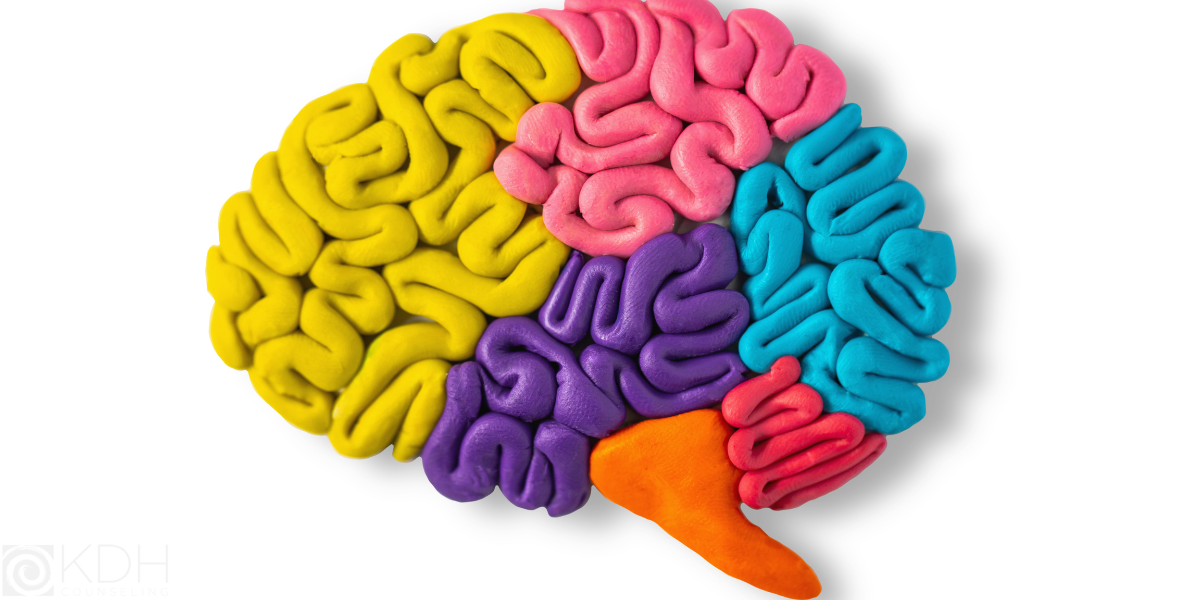
Understanding your brain.

A conversation about the brain, the body, and making sense of emotional responses.

With KD Holmes & Whitney Storey

Episode notes & transcript

KD and Whitney explore how learning about the brain and body can shape the way we understand mental health.

Episode transcript

This conversation was recorded earlier. Visit Our Team for current credentials and services. The transcript follows the recording and may contain transcription errors.

Welcome. So we are about to start a series. It's going to, we're KDH Counseling. So we're going to do a podcast series on all things therapy. So we're going to start today though with brain. So the biology of how we are, or the way that our brains and our bodies works greatly impacts our mental health, obviously. And so today, Whitney Storey, she's a PLPC and she's a professor. She is going to discuss brain function. We're just going to kind of see where this goes.

I always, my poor husband, I do this with him all the time of like my, my love and appreciation of the brain really changed the way that I understood my own anxiety, especially in grad school. I was at the peak of it. And so because of that, it's really become like this natural thing that I talk about with other people, whether that's my clients or like I was texting with a friend last night and all this stuff just kind of comes out now.

Cause I find it to be so helpful. So yeah, just having an understanding of like why our brains are the way that they are. And I think that really starts, if we back way up to the idea of understanding that like, I am not my brain, which I think for a lot of people is just a thought that like never came up before a very, I don't know, it feels, you probably can relate to that too. That like for a long time for me, it felt like, like I am anxious and that the thoughts that were happening were because of me and the feelings that were happening were because of me.

Like, I mean, it's just, my brain just does stuff sometimes. And it's the way brains are made a lot of times, you know, with anxiety, I try to explain it like that was created so that we would stay alive. Right. So we would get something and have a physical response, but now we have all these false alarms due to our brain. I don't want to say malfunctioning, but just doing what it naturally does. Right. So we had like for forever, if we go back to like our cave and people ancestors, like, you know, I see this shadowy thing in the distance and I'm really hungry.

And that shadowy thing could be like a big berry bush and that sounds delicious, but it could also be a saber tooth tiger. And we are, we're the ancestors of all the people that were like, well, I think I'm going to stay back in the cave. And I mean, they survived, so they had lots of babies. So this hesitation of like, there's a thing over there, it could be good, but also it's really scary. So I think I'll just not, and so our brain learned like that sending out red flags kept us alive.

So our brains are constantly looking for danger, but we don't, we don't have saber tooth tigers anymore. So our poor brains like now rejection, rejection is a saber tooth tiger. You know, failure is a saber tooth tiger. Imperfection is a saber tooth tiger. You know, the little, the little subtle facial differences that you see in humans when you're talking to them become saber tooth tigers. And literally to our brains, there's no difference between like an actual saber tooth tiger and these things that can't actually kill us.

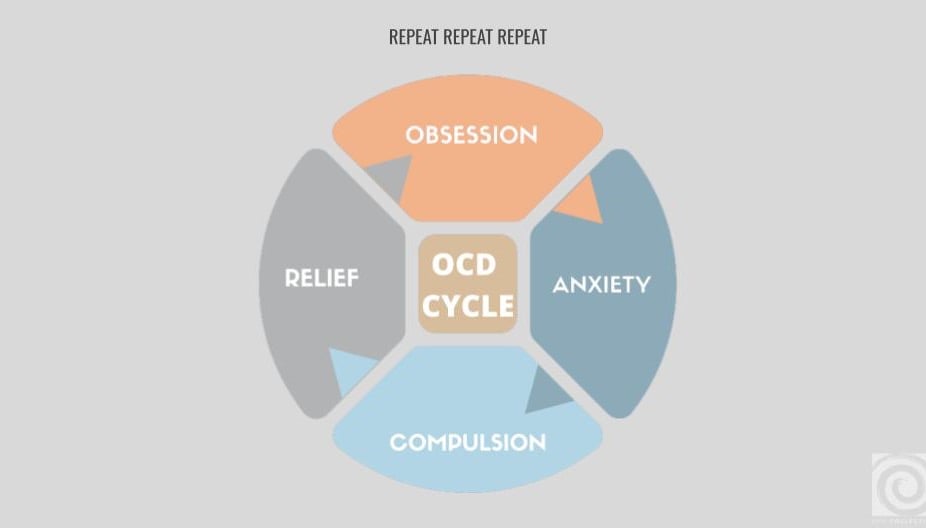
So our reactions to them and the fact that we're like, our brains are so focused on watching for these things. It can get really overwhelming. Well, yeah, and I see it a lot. So I specialize in OCD. And so they have more people with OCD have more gray matter in their brain and their threat sensitivity is super high and it's based on a lot of times just thoughts in their head. So it's not even reality. They call it, well, the cognitive distortions thought I said fusion, but because they're thinking it, they think they did it or it's going to happen.

And it's exactly what you're saying, right? It's it's all just thoughts in our head. And I feel they feel really real, especially I'm thinking about like I feel like that's a whole nother podcast. But if we look at like classical and operant conditioning and like humans, humans are we are animals at our most basic. And so, you know, somebody with OCD or somebody with a phobia or somebody with just general anxiety like me, like if I avoid the thing that's making me feel anxious, I feel better.

And so that's really reinforcing. So, of course, why wouldn't I avoid it next time? Exactly. I mean, it's how we're made. But when you avoid it, you increase it. Right. It's like a compulsive. I'll look at it as a compulsive avoidance and it just keeps going. So explain what the what did you call it? Classical and operant conditioning. Explain what that is. So basic it's it's called associative learning. And basically, if you are a creature, a being that's basically fancier than a plant, so like earthworms, goldfish, we don't tend to think they're very smart.

They learn through associative learning, but also very fancy creatures like humans and dolphins like we also learn through associative learning. So it's all about associations. It's unconscious learning. It's built in to the function of our limbic system, which is a very important part of our brain. And it's basically the idea of learning if then. So in classical conditioning, it's things like, you know, if somebody throws a ball at me and I get hit, like I'm going to have this kind of reaction.

And over time, if I continue to get a ball thrown at me, when the person like just looks at me, I've learned that that person, when they look at me, they throw a ball at me. I'm going to flinch before the ball even comes. So that can happen with anxiety. If I know that, you know, going to my dad's house, there's a lot of trauma and chaos. I'm already flinching and getting ready for it before I even go. So that that's one piece of it.

And then the other piece of associative learning is rewards and punishments. So if I feel anxious and I avoid my anxiety goes down, I've reinforced that avoidance. And that's not it's not a good or bad thing, which I think for a lot of people, especially with my clients, when we talk about anxiety, like, of course, it sounds good to like, well, let's just get rid of anxiety. Like if I could, if I could wave my magic wand and get rid of anxiety, that would be I would be a very wealthy counselor.

Um, but anxiety is really helpful if I'm out in the woods and I see a bear, like, I don't want to have to sit and think about whether I should, you know, fight or flee. Like, I just want to be able to survive. So these processes that our brain has learned and the way that our brain has become a problem solving, danger detecting machine, these are good things that help us in a lot of ways, but I mean, like a lot of stuff, too much of too much of anything can get us into trouble.

So when I start avoiding, you know, going to dad's house, but also like talking to dad on the phone and suddenly father's day is making me feel anxious. And suddenly, like the idea of having my own kids starts to make me feel anxious. And suddenly my life gets smaller and smaller and smaller and smaller. That's when we see, I mean, you and I, that's when we see people. Um, and we have to start looking at the, the helpfulness of these types of natural processes and learning how to kind of live with them as opposed to just like following their rules.

Well, and it's interesting because when you follow their rules, you make more of the experience of the feeling, right? So, and this is why I love OCD because treating it once people understand that and they're able to act opposite, which is a dbt thing, but that, um, that feeling, they actually have less anxiety and I can tell when they come in session, their speech patterns are when they're in an OCD loop or fast and rapid, you can see the anxiety. It's visible.

And when they've been doing like abstaining from avoidance and things like that, when they've been facing it, their anxiety and their speech is less in session. I mean, it is, it's crazy how the human brain just unknowingly creates more of the experience by acting on it. Yeah. And I see that in session with people to look at a few of my clients, uh, like current and past throughout and in myself, now that I'm thinking about it, like when I'm feeling anxious, like I get tighter and then when I see them kind of like, It's, it's really, it's really nice.

I like to stay in those moments. Um, as long as we can. Well, yeah. I mean, that is the way through it is to train our body. That is that it is a false alarm or to not just unconsciously act on the anxiety to be able to differentiate when it's helpful and when it's not. I mean, yeah, this is why I love, I also love working with phobias because they're treatable or to get this understanding that I just have to gradually face it.

It's so empowering. I mean, you know, this facing my own anxiety, so empowering. Yes. Yeah. And then like, it's, it's helpful for, for. everybody, like even people who aren't coming to counseling sessions because their life has been so limited, like I'm thinking about my students and talking to them about like, hey, if you want a future in a helping profession, being able to be in front of another human, scared out of your mind and feeling like you have no idea what you're doing, but looking like you're here and you're comfortable and you're with somebody, like that's the same process, learning how like you can let your mind just do what it's going to do and you can be, it's incredibly empowering.

I love it. Well, and can you give more of a description of the brain part? Because me and you could geek out on the anxiety stuff all day long, but like what is going on in the limbic system, like that whole thing, the frontal lobe, you know, yeah, go ahead. Oh yeah, so first what I think is helpful for people to know, especially like Monet and I work with some younger clients, and I'm thinking about my students too, and even when I'm working with adults, a lot of times parenting is one of the big topics, so I like to talk about just brain development, and it's really quick in that like our brains don't finish developing until our mid 20s, so for a lot of parents knowing that like their teenager is, you know, impulsive and not thinking about consequences and horrible at planning, like that this is all developmentally appropriate offers some empathy, and it can give us empathy for ourselves too when we think about, you know, our teenage years, our adolescence, our young adult years, and the part of the brain that is related to all of that, like, you know, predicting consequences, being a planner, thinking through things, being able to kind of like predict, that's all frontal lobe, that's the very front of the brain, which is the last part of your brain to develop, so while that part of the brain, it's going through intense development during adolescence, during teenage and early adult years, when we're under construction there, our processing goes on a detour through the limbic system, which if you imagine your brain, and then you like opened it up to look in the middle, it's like right in the middle of the brain, and the limbic system, this is not Whitney, this is textbook, the limbic system is responsible for the four F's, which are fight, fight, fight, flight, feed, and mate, and so it's responsible for all these unconscious kind of reactive kinds of things, like you don't have to think about whether you're hungry, like your stomach gets hungry, and it starts growling, and you just feel hungry, you don't have to think about whether you should, you know, mate, especially if you think about animals, they don't have to like ponder whether they should have babies, like it just happens, and fight and flight is the same way, so that's the limbic system, when I have a question, is in that, or is because, oh yeah, freeze is in there as well, yeah, the whole fight and flight system, now we've got fight, flight, freeze, and fawn, I think is the fourth one that's been added, falling so close to freeze, what's the difference, I mean, I think it's a more active freeze, if that makes sense, so like fawning is about like people pleasing, like I'm not just gonna like freeze up and disappear, I'm going to still be actively engaged in trying to like be who I need to be, and please everybody so that I'm safe, got it, so if like the bear is hungry, I'm going to actively try and like provide, here bear, would you like my arm, awesome, have my arm bear, as opposed to just like freezing, so yeah, and it's all unconscious, which again is good, because we don't want to have to think about what to do in danger, but I mean, like, you know, we've got all kinds of red flags in the world, whether you've had traumatic experiences or not, there's, like I said, like the subtle body, body language or facial expression differences can become red flags, which trigger our limbic system to go into fight and flight, and for a lot of people, the, especially if we're looking at like trauma, PTSD, that kind of stuff, like their limbic system, their fight and flight system has been triggered so much that it's on, it's overreactive, it's constantly scanning for danger, which is why people are overreactive, hyperactive, like even when they're asleep, they're having, like they're processing and thinking about danger and re- experiencing danger, because that limbic system has a hard time turning back off.

Well, and I say it's, the way I describe trauma in here is that when that part of our brain gets activated, it doesn't know that the threat's over, so our brain is doing what it needs to, to protect us, but part of trauma processes are to tell the brain, that part of our brain, it's over now, I mean, it's such a, like even when I say it in here, it's a tricky one, some people are like, it's not over, I'm like miserable all the time, you know, and other people are very reassured by that, they're like, it is over, it happened when I was a child or it happened and I'm now, I'm now 40, I can look at my hands, I'm 45, right, I have 45 year old hands, I can be like grounded in the now, but that part of the brain, I mean, to me, that's the emotional part of the brain, that's the trauma processing part or the trauma part, not the processing part, where we, where we process memory, so yeah, I'm thinking too, like with, with everything that's gone on with the pandemic and since then, so like working on the perinatal mental health certificate that I'm doing right now, we know that pre-pandemic rates of postpartum depression and postpartum anxiety, it was, you'd see that kind of problem in about 24% of women after giving birth that experience some kind of issue, since the pandemic, that has gone up to 75% of women who have given birth and it's because like literally, the, like the threat has not ended, we are constantly, like literally, we are under threat and there's things that we can do to, you know, of course, like getting vaccinated and avoiding crowds and like, you know, that kind of stuff, but there's so much actual and potential threat right now that a lot of people are struggling with, with anxiety.

Do you think that part of it too, so I'm thinking of two other factors, part of it is that mental health now is way more accessible and I feel like there's less stigma, right? So people, maybe before that 24, it wasn't quite the right number because people would just grant, like bear it, right? I'm just going to buckle down and I'm just going to go through this and I'll get over it where I think now there's so much education out there and it seems like the stigma is lessening.

I mean, I could totally be wrong, but that's what it is. I think we're definitely doing better in terms of stigma, but I mean, you know, I even, even talking to my husband, it's amazing how, you know, like boo, you're married to a counselor. How are you going to feel weird about like thinking about going to counseling? I know. No, welcome. I told my guys the same way. Um, and that's a tough one, but you know, to each his own, but I do think that that piece like people, it seems a little better.

It does for people that maybe are searching online, there might find more information now. And then the other piece is the isolation. Yeah. Yeah. We are such social creatures and that I feel like there's more isolation, even in my life. And I go out in public, I do all this stuff. I'm not, I don't live in any sort of anxiety day to day now. Um, but I still go out less than I used to. It's a very, my life has changed.

Yeah. And people, I mean, people who are struggling with anxiety, um, like it, you are, you feel safer, the more you can control. And so that means like the fewer people that are in your life, the more control you have. So it's one of those perpetually, I don't know, it's difficult. It's one of those cycles that like the more you isolate, the more you avoid in theory, the better you feel, but also the smaller and smaller and smaller your life gets.

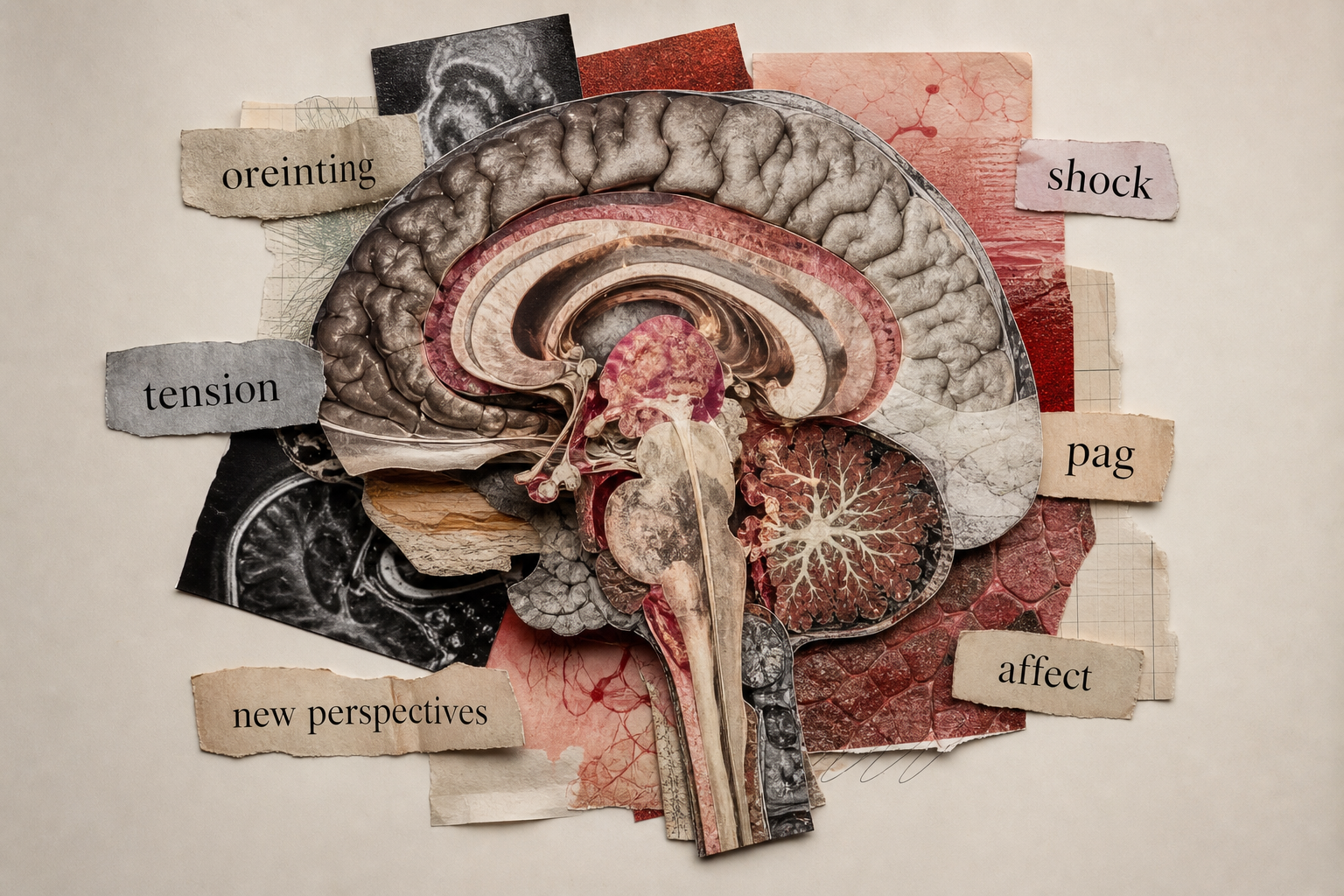
So, and the more anxious she will feel. Yeah. Cause that part of your brain just keeps getting reinforced and growing, but whatever. It's just more activated. Yeah. And I'm curious. So I'm going to take a training it's coming up. I'm not till September or October, but it's called the deep brain re it's called deep brain reorienting, but it's like deeper than the limbic system. What do you think is underneath that? That's even deeper. What would be, I don't know the biology behind it yet.

Yeah. I don't, I don't know what they would be. Okay. I don't know. It'll be interesting. I know I'm wondering, I feel like, you know, the, so, and when we talk about brain development, we talk about like old brain or reptilian brain and the new brain, I feel like old brains about as deep as it gets. So that'll be really interesting. The little bit I know about it, it's, it's the reaction we have within milliseconds. So it's probably going to be part of the limbic system, but not, um, but not the verbal piece.

Yeah. Yeah. Yeah. Whatever's beneath that. And so what do you think's beneath that then it would be the limbic system, but it would be the nonverbal like, uh, what is that called when they, they train clients? I have feedback. I wonder if it's like a biofeedback kind of thing where they're training people to recognize really subtle cues, you know, before it gets to like our thinking and our processing about it. But like, you know, the very first subtle cues that anxiety is happening, like changes in heart rate, changes, like my hands get sweaty.

Yeah. I think you say like attention in your neck, your jaw, like really subtle. Like vagus nerve. Yeah, and what is the vagus nerve? Explain what that is. I am just beginning to like dive into the vagus nerve stuff, but it's the nerve, as far as I'm understanding, it's the nerve, it runs back behind our ears and then all the way down. And it's related to all of this instinctive, reactive fight and flight survival kind of stuff. So it must have a very important piece in, I would guess probably like the blood flow that's involved in our autonomic nervous system that when our limbic system turns on and it takes blood away from like our stomach and brings it to our muscles to get ready to like fight or flee.

So it's related to like the electrical signals, the neural impulses and all the blood flow related to all that stuff. And doesn't it go through our stomach? Is that the one that goes to our stomach? Yeah, it's gonna be related to our stomach. It'll have some interaction with our reproductive system, our muscle system. Like it's gonna be, it's going to be, it is, it's related to all of that autonomic and the sympathetic, the parasympathetic nervous system. What is the sympathetic? Cause you said autonomic is basically just, it's a reaction that naturally happens, right?

Yeah, so autonomic, I mean, it's like automatic. That's how my brain remembers it. And the autonomic nervous system has two parts and it's the sympathetic and the parasympathetic. So the sympathetic nervous system is the one that like, when you have danger, it's sympathetic for you. It's gonna keep you alive. So it's gonna kick into survival mode, fight, flight, freeze, fawn, all of that kind of stuff. The parasympathetic is the opposite of that, that calms you back down and helps you to relax and recover once the danger has passed.

So yeah, these two systems are basically constantly fighting with each other throughout the day. And if you were to do a meditation or yoga or some sort of stretching, cause I don't particularly do yoga practice, what, yeah, I hate that whole form of thing, but it's really good for you, I know that. But if you were to do these type of activities, is that parasympathetic? Yeah, that's like purposefully getting into your parasympathetic system, forcing your breath to slow down, retraining your attention to something different.

And what's interesting about like trauma and anxiety is that sometimes those types of activities are actually more harmful. So this is something I talk about with my students. One of my classes, we do a lot of meditation and we talk about like, hey, if you're doing meditation and you're finding that it's activating you, this might not be the way to do it for you. Because for a lot of people, their trauma is related directly to their body. And so the more they pay attention to their body, the more their anxiety comes up.

Correct. But for a lot of people, their anxiety is external. So they're so focused on what's going on outside of them that reminding them of their body and coming back to their body is very calming and peaceful. So that's, it's such a complex, I don't know, it gets messy, but this is why it's so interesting. Well, yeah, but I do think it's good for people to know if you have a trauma history, even if you don't think it affects you and you have a hard time relaxing, it's in there.

Yeah. We have books on this. The Body Keeps the Score is a really good one, but it's in there. And often when people have a trauma history, it's not safe to relax. Yeah. Because that part of their brain is like, whoa, the threat's still happening. This is just how I describe it. And so they can't let that part of their body, they can't let themselves relax because something's not going to happen. Yeah. So for some clients, so like in one of the members of my family, actually, their anxiety would hit them only when they were sleeping.

They would wake up with horrible panic attacks and they were so confused about like, why is this happening only when I'm asleep? And it's because of that, because your brain recognizes when I'm asleep, I'm most vulnerable. And also when we're asleep, we're not like actively engaged with our brain and what our brain is doing, you know, like fighting with our thoughts or purposefully distracting or whatever. And so our brain has free reign. So yeah, our brains are incredibly powerful. They are, they are.

And so I guess the point of this is for people to know that this is biological. And so you can't, I think there's so much stigma and shame around mental health, you know, even though it's getting better, I still think people come in thinking because it's in their head, they should know better. Right? And I want people to get that this is biological. And I think even more specific, it's not biological like asthma or like sickle cell. It's not an illness.

Like it's biological in the same way that like the way that our heartbeats is biological. Like this is the way that brains work and there's nothing wrong with that. And so having empathy for ourselves and I think even more usefully being able to empathize with our brains that like my brain is feeling so anxious. Not me, I'm not feeling anxious. My brain is feeling so anxious. My brain is working so hard to try and protect me. Like poor thing thinks that there's danger everywhere and being able to like both get distance from like my brain is different than me and being kind to ourselves and being kind to, you know, what we're working with.

I think that's kind of like the first step to doing things different. I like that. Well, and it's the way in. I really, and I always often compare it to like diabetes but I like the comparison, the heartbeat. Just because maybe depression and generalized anxiety disorder is like diabetes, right? Because we wouldn't shame ourselves if we had insulin, we would just take it. And we wouldn't not go to the doctor if we had blood sugar issues. We go to the doctor and take care of it.

But I like that the heartbeat is just the natural, it's the natural comparison for what's going on inside but maybe this diagnosis is compared to, you know these other medical diagnosis. Yeah. Just to break the shame about it because, you know, really the more we know, you know remember that for kids, the more you know, but it's true. I mean, it's very powerful when you can learn these things and come from a place of self-compassion. And it's helpful for us interacting with ourselves and us interacting with our loved ones who have anxiety or depression or trauma.

It's helpful for me as a parent, like being able to see my kids' limbic system activation like being able to see them tip like this and then help them figure out how to do this. I mean, it helps all of us. And being able to see like when they get activated how that activates my system and learning how to like parent through that. So it's just, I just feel like it's a win-win. The more you learn about your brain and how your brain works, I mean, the better.

I love that. So, do you have any closing thoughts? Oh man, I just, I feel like I'm always reminding people that like, you're not broken. Like the way that your brain is behaving makes perfect sense. And usually, usually it's being incredibly smart. Like the way, if you think about trauma if you think about like generalized anxiety like the way that your brain is watching for danger is so smart. Like look at the way that it has figured out how to protect you.

And the other side of that is like your brain doesn't have to keep doing that. And so that's where seeking help, meeting with a counselor, meeting with a therapist your doctor, doing medication, doing counseling that's where it can be really helpful is that like, wow, your brain has helped you for a really long time. Let's give it a break. Let's teach it that it doesn't have to work so hard. Yeah. I love that. I think that's good advice, you know? And if you'll have any questions cause you know, you can message any, either one of us we'll attach stuff at the bottom and we will try to address it.

If you want us to do a video on it, we'll do a video on it, whatever podcast. Thank you so much for talking about this Whitney. This was so fun. I'm sure we could go on and on. We could. We were totally geeking out, but yeah. I mean, the basis is just for y'all to know that it's biological and your body's just doing what it needs to do. Right? Yep. All right. Bye. Bye.

Therapy & change · 21:27

Making room for change.

Allison shares her approach to therapy, motivation, and working toward change.

With KD Holmes & Dr. Allison Buller

Episode notes & transcript

KD and Allison discuss therapeutic approaches and the conversations that support people as they consider change.

Do I need to know exactly what I want to change?

You can begin with questions or uncertainty. This conversation explores how a therapist works alongside someone who is considering change.

How can I get to know Allison?

Read Allison’s current biography on Our Team or Therapy. The episode offers an earlier, longer conversation about her approach.

Episode transcript

This conversation was recorded earlier. Visit Our Team for current credentials and services. The transcript follows the recording and may contain transcription errors.

Welcome to KDH Counseling's Leaning into Therapy series where we explore therapeutic approaches and evidence-based protocols to give clients the most comprehensive understanding of therapy. Our goal is to empower clients with research-based interventions so they can make informed choices about their treatment. Join KD Holmes, a licensed professional counselor with 16 years of experience and her team of clinicians as they share their expertise, insights, and therapeutic interventions. Get ready to delve into the world of therapy in this series specifically designed for clients by therapists.

Welcome back to Leaning into Therapy where we delve into various counseling topics. Today I'm doing a KDH Counseling version of it. So we have Allison Buller, a PhD and an LPC. and we're going to interview her on a few different topics related to how she does therapy. So I'm really excited to have her. So Allison, do you want to share a little bit about yourself? Sure. Thanks for having me. I am, as you said, I'm a PhD in counselor education, but my first career was as a licensed professional counselor, an LPC.

I love therapy. I love working with clients. I've been doing a lot of in depth training in three specific therapeutic interventions. One of them is dialectical behavior therapy. Another one is motivational interviewing, and the other is mindfulness- based cognitive therapy. So these therapies really drive the kind of work that I do with clients. And it's evidence-based, it's effective, and it primarily works with adults and teens. So this is my primary population that I work with. Well, I want, there's a lot of questions I have just based on that intro.

So why those three different approaches? Like why do you think it's important that we have evidence-based protocols that are like driving what we do? So evidence-based protocols and the research really demonstrate that these interventions work over time and with different therapies and different therapists. So the idea is if we put these therapeutic interventions in place across the board, over time they make a difference, And we can prove that in the research. They may not work for everyone, They're not a panacea, but with the majority of the population, with the majority of diagnoses, these evidence-based therapies make a difference.

They make a change happen. It's one of the reasons I'm so excited that you work at KDH Counseling. So because I think that when we go to school, we're taught, most of us, when we're in grad school, we're taught to do, what was the term for it? It's eclectic, right? We just kind of pick and choose different approaches, and you get out of school and you don't really have like, a definite like this is what I do, This is how I do it.

I'm not saying it's bad, but when you get into the realm of more moderate, I think to severe symptoms, people need a little more direction and guidance, like a road that we're on. And I think as therapists, it produces better outcomes and we have that certainty. Do you notice the same thing? Is that part of why you think these protocols are so much more useful? Yes. So I also graduated from a program that was eclectic in my training, and it was nice.

You know I had the opportunity to build my skills, but the skills, as eclectic says, were dispersed. Whereas when you have a focus in therapy, like dialectical behavior therapy, you can really understand what causes change in patients or clients and the interventions that work without diverting your attention into many different eclectic forms. And so when I focus on a specific behavioral intervention with a client, I can really reinforce that behavior and work with the client individually to make sure that these interventions are creating change rather than trying multiple different things and really dispersing our focus This is what creates change that learning and relearning and relearning that conditioned change I love this man I could go off on just this concept alone but that's not the point today So we're going to start with motivational interviewing So I think a lot of people we're talking about a lot of different things maybe that the general population doesn't know And one of my big things in KDH Counseling and the KTH Collective is to educate the general public about what we do how we do it because I think when you have that understanding you can be more intentional about change right So what is motivational interviewing It's a great question I don't know how much people know but motivational interviewing started in the addiction field It's a way of understanding clients ambivalence towards change And ambivalence just means both To me it's like I want to change but I don't think I can It's like both It's like both and I want to change but then maybe I don't want to change Um I think I have a problem but I don't want to let go of this behavior right It's like this It's both and instead of yes I want to change I'm coming to therapy I want to work on my OCD I'm a hundred percent in I want this I mean most people like they're occasionally that motivated right Right But a lot of times it's ambivalence Yeah Yeah Ambivalence is the desire to change and the desire to stay the same Yes Right And most everyone has that ambivalence When we talk to clients about what they want to change they have an idea but they're somewhere along the way in that change process Motivational interviewing is working with the client to develop their own ambivalence towards change versus their ambivalence towards staying the same We really want to work to motivate them to build the change to create that change behavior And so it's a subtle form in the beginning So we work towards just motivating creating that ambivalence and really developing some of the language of change so that the client can hear themselves talking about change This is what we think of as a traditional talk therapy in a way We also build into it values assessments We build into it scaling questions We build into it affirmations And so there's a lot that goes into it that's really skillful that sometimes clients aren't even aware of because it's not a behavior change or a technique It's something that I'm doing that helps you develop your own change talk So you talked about three different terms I didn't write them down What are those three terms that make up motivational interviewing You just said it It's affirmations and scaling questions in motivational interviewing What would that look like So first of all motivational interviewing has a focus There's four stages The first one is engaging So we want to engage with the client which is just relationship building to really understand what the client sees as the problem what they try to do how they define social anxiety et cetera et cetera et cetera So we really want to understand through that engaging process The second stage in motivational interviewing is focus So we want to find the focus because there's probably a lot in social anxiety that this person is experiencing that's causing their life to become unmanageable So we really want to focus the session so that we can identify areas that we can make a change We don't want to be dispersed initially Through the focusing process this is where we ask the client what do you want to change And there may be a lot of things that they want to change but we're going to choose a few to start with and that we can focus The fourth part is called evocation Sorry The fourth part is called evocation During the evocation process we really start to build from the focus the rationale Why is it important that you change What are your values that create this change What are some of the reasons that if you don't change your life may become more unmanageable And differently what are some of the reasons why if you do change your life will get better So we build into it these evocative questions that help to blow up this change into something that cannot be denied something that has to happen We also focus on some of the change what's called change talk The desire to change the reason to change the ability to change and the need to change And so reflecting on some of these change talk is all part of this evocation process And then the last part of motivational interviewing is called planning Really we get into action planning What happens next What are the steps that you can take to put this plan into place And so this is all part of it And we're going to talk later about DBT but DBT is infiltrated as part of the plan It's also part of the evocation process We build in some skills to help the plan take off to help remove some of the barriers that may be in place for making the plan happen So in my mind motivational interviewing and DBT really work well together I love this So when you were talking I kept thinking about the consequences of whatever the issue is that they're going through right And it made me think a lot about DBT So I think for myself I've always seen I call myself like a bossy therapist And what I'm realizing as you're talking it's not that I'm bossy This is so fascinating I think that we're trained to be dispersed and like meet the client where they are So today they want to work on social anxiety Next time they come in they're like Oh I don't want to And so we just like Oh that's hard I understand why we're very empathetic And when I work I'm like Oh well but last time you said you wanted to work on social anxiety So what's changed from here to now You know I naturally do this because of dbt It's really interesting that um maybe the ways that I've been describing myself are not even accurate It's more that I facilitate motivational interviewing because of dbt and it helps to hold the client I say accountable and that gets such a bad rap but it's like if you're if you're paying me and you're coming to my office for this thing right I'm holding you accountable for why you're here It's like funneling them Yeah And I think that's how you were describing all these things in a more intentional way It's not just like Oh it just happened to be this way It's like there are protocols There's this system There's these ideas that we can use to facilitate change more intentionally Yeah Yeah And motivational interviewing there's three styles there's directive right Which you can be especially if someone's at risk of harming themselves right There's a there's point and a need for directive there's permissive which is just following the client And if they're already on this maintenance action phase then there is a place for that But primarily we use a guiding style which is not permissive It's guiding We walk with them through this process giving them the skills along the way based on the expertise and the evidence of what works And so while MI has these three you know we see DBT and they they have a similar focus There's a benevolently demanding right This is a kind of a kindness but we really need to have this happen and unwavering centeredness right And so it sounds like that's the style of that you use as well right We really want to help you work and hold you to like you said accountable Well and I'll the way I would describe it before this conversation which is really interesting I think I would have described it more in terms of like based on their level of care right Or the level of need So if the issue is more severe we're dealing with moderate or severe I would be more more directive or I might be more guidance guidance version If it's like a moderate thing if it's mild I'd be more permissive So it's like I was tracking and doing these things without the intentionality of really knowing why I was doing it It's really interesting man I love this Really kind of gives you a label and a name for the things that we're doing and allows you to be more intentional about it versus just kind of Oh I think I'm doing it You know well and that yeah And that intentionality produces better outcomes for our clients That's the whole point That's the whole point That's right I love it What's your favorite part of this protocol motivational interviewing Yeah What's your favorite part Why do you like it so much Because it gives me a reason for why I choose the style and the technique for what I do So for example recognizing change talk when you recognize change talk in a client that's what you reflect because that's how you recognize their ambivalence That's how you recognize what they want to work on Even if they're not fully aware of it themselves it gives you more information about what what you want to work on what the client wants to work on in therapy You're not flying blind What is change talk Give me some examples of change talk What does that look like A client will come in during the engagement process and they'll say something like I really need to change X I really need to stop smoking I know I need to stop smoking If I stop smoking I can probably get back to my former weight You know but I don't think I can I used to smoke gosh for 20 years So I'm really I'm just I don't know But if I don't stop smoking you know my kids said that you know they're going to be upset with me So in that short statement there are many different change talk that I can recognize One is I need to stop smoking right If I don't stop smoking my life is going to be my kids aren't going to come visit me right I know that I can stop smoking because I've done it before There's an ability right There's a need there's an ability It's also about a confidence too They're not sure they can stop smoking And if I do stop smoking I can lose some of this weight So there's also that ability So you're recognizing within that short statement the desire to stop smoking the need to stop smoking the ability to stop smoking and a reason to stop smoking Having and recognizing these individual points is not as important as just recognizing change talk in the client Because everything once you start to recognize it is change talk I can't do this That's change talk I can't do this I can do this So it doesn't necessarily mean they think they can do it It's just any kind of talk around the idea of changing whatever this is That's right I don't want to be this way That's change talk I love this Yeah And once you start to recognize change talk you recognize what to reflect to learn more about to really evoke from the client Because like I said some clients come in and they're not really sure what they want to change They just know they want to stop being miserable They want to stop having anxiety And so if I don't stop having anxiety I don't know what I'm going to do Well that's not necessarily change talk But we want to build from it areas And so we want to find out And sometimes our clients don't know like I said We have to engage with them to help them understand what needs to change Well and I think one of my favorite things about this is when we work and we have protocols like this that we're working from people don't know we're working from these protocols It's a very like this type of theory guides how you work and what you see but it doesn't come out super clinical I mean when I'm doing DBT I'll be like okay what are the pros of this And that's from DBT what are the cons of this But I'm not like okay in dialectical behavioral therapy I might tell them Sometimes when it's real natural and it seems like I'm just talking I'll say like this is actually from a theory I'm not just talking off my head right This is an actual theory I'm like it's not really important which kind but it's a theory I'm using And so I think for clients to know it doesn't feel clinical or forced It feels like natural language and just a conversation but we are using I mean you're using this protocol to guide which questions you ask how you respond how you funnel them towards change because that is why they're there and they don't have to be willing to change They can be at that very beginning stage and this still works This is still really useful Yes I think you mentioned that stage in motivational interviewing we work with the stages of change which is an actual theory that aligns with motivational interviewing You're right That's a great point We don't have to be ready to change The more we talk about change the more likely it is for change to happen A lot of clients come in at that pre contemplation or even contemplation stage of change where they're still trying to figure out do I really want this to change And can I change Because even if I want it to change I don't think that I can I've tried before in the nothing works et cetera et cetera That's ambivalence Yes Yeah And this is a real thing in therapy I mean people come at various stages Sometimes family members want them in our office and they don't even want to work on the issue Sometimes they want to work on the issue but don't think they can Sometimes they come in they want to work on the issue They know they can They're just like tell me how you know there's just so many versions of this I love it I think this is beautiful I cannot wait to learn more One last question about this What is Mint Because I know when we talk about it on our website we talk about Mint So just a brief explanation of what is that credential Okay So Mint is motivational interviewing network of trainers And so this credential I worked with a consultant who was Mint certified when I was learning motivational interviewing And through the process it took a couple of years of learning how to how to practice motivational interviewing learning how to score my videos and training I went through an official certification process where I now know how to train other people to do motivational interviewing And I do it's one of the things that I practice So it's just a step up from practicing motivational interviewing Now I can train others to learn how to practice motivational interviewing So that's the credential Well and I think it when you start to train others on what you do it creates another level of intentionality in your work I mean it's really crazy how how that level of training makes you understand it even more It's almost like it becomes like just second nature to you It's yeah So I love this I'm really excited you do this I think this is good stuff Yeah I do too I fell in love with it all over again Once I went through the Mint training because it is so powerful and yet it's under understated Yeah I would agree Okay So we will have more information on dbt and on the mindfulness based cognitive therapy I want to add behavioral in there but I'm not But for today that's all we're talking about Thank you so much for coming It's fun Thank you Bye

Finding your therapist · 13:51

A conversation with Brent.

Get to know Brent’s background, approach, and the people she works with.

With KD Holmes & Brent Nicolini

Episode notes & transcript

An earlier conversation welcoming Brent to KDH and exploring her background and approach to therapy.

Episode transcript

This conversation was recorded earlier. Visit Our Team for current credentials and services. The transcript follows the recording and may contain transcription errors.

Welcome to KDH Counseling's Leaning into Therapy series, where we explore therapeutic approaches and evidence-based protocols to give clients the most comprehensive understanding of therapy. Our goal is to empower clients with research-based interventions so they can make informed choices about their treatment. Join KD Holmes, a licensed professional counselor with 16 years of experience, and her team of clinicians as they share their expertise, insights, and therapeutic interventions. Get ready to delve into the world of therapy in this series specifically designed for clients by therapists.

I'm excited today. I have one of our newest team members at KDH Counseling, and she's going to tell us a little bit about herself. I'm KD. I'm the owner of KDH. I've been doing therapy for a long time, and I like to interview people when they start working here. So today, I have Brent Nicolini. I always say it wrong. Is that right? Got it right. Woo! Okay. I got Brent. I'm excited. So Brent, will you tell us a little bit about yourself?

I am a licensed professional counselor and a licensed addictions counselor I have been working in the addictions field for over 10 years now, but I also work with other mental health disorders, and that's what I do. Well, we are excited to have you. You are our first addiction- educated therapist. I don't even know what to say, but like somebody that works with addiction, like specifically. So I'm really excited, because that includes codependency, it includes loved ones of alcoholics or addicts, it includes the addicts themselves, it includes children whose parents were addicts or alcoholics and maybe have trauma from that.

I mean, it's just, it's a lot of people who are affected. So I'm excited. I'm excited Will you tell us today, how did you get into therapy? So in 2010, I sought help for my own addiction. And when I was about a year sober, I was given the opportunity to start studying for addictions through the ADDRA program. I had a CEO who believed in me to be a counselor. So she would pay for the classes, I had to pay for the licensing, and she was my supervisor And from there, I started working as a CIT.

And I went back to the, yes. I was going to say, can you say what a CIT is? People aren't going to know what that is. It's a counselor in training. So I started out as a CIT. And from there, I continued my addictions education. So I went back to the facility where I was a client And I started working there and I started working there as the house cleaner. And so there I worked part- time as a house cleaner. And then I was also a counselor in training.

I continued on and on You have to there's a requirement of so many thousands of hours that you have to get. And then I became a registered addictions counselor, Worked in the addiction fields. I've worked in treatment facilities of a variety of kinds of treatment centers. And then I decided at the age of 51 that I would go get my master's degree. So I did it. And because I wanted to learn about the underlying mental disorders that are associated with addiction, Addiction, there's anxiety and depression and all these are, they're interrelated and they're connected.

So I felt I needed to learn more about those mental health disorders. So then I went and got my LPC And it's really helped me to understand that whole realm of just, what's connected to the addiction and, just mental health disorders in general. Well, and the LPC, that's what I am as well. So that's a licensed professional counselor. And that's just, you have to go back to school, get your master's. I mean, it's a long process and then you have to be supervised.

It's, long, But it has given you a greater understanding of all the mental health issues that are feeding that addictive process. Is that how you'd say it? Absolutely. That's why I went to grad school was to learn so I could learn more about these mental health disorders that' are associated with addiction or even without association with addiction So and then from there, I got the licensed professional counselor and then I went back And with a master's, you can retest. I took there were a lot of tests involved for licensed addiction counselors.

so that's how I got, you have to have a master's to be licensed in, in, in any, in any profession. And so and I actually started out in counseling in a similar, so I was going to be a substance abuse counselor. I started the CIT thing, counselor in training, And then I realized I'm really not good at substance abuse counseling. And so I went back to school quicker. I went back to school like almost immediately and got my master's in So we have similar histories And I I had a little drug problem when I was younger and was sober for like eight years.

So there are some similarities that I just think make, maybe it's why I like you so much. I don't know. There's something about the way we think about things That's very similar. My next question I wanted to ask you was, what do you work with? Cause we talked about substance abuse, but I feel like that's just one of the many things you work with. So I work with people who are 18 years or older, a variety of mental health disorders, trauma, depression, anxiety, grief, addiction, of course and, and most mental health disorders.

Because the mental health disorder is usually the root of, of, or the trauma is the root of why we go and, and become addicts or whatever else. So, and even though it's not associated, some aren't associated with like depression can just be associated with other types of trauma or whatever is going on in the client's life. So codependency, you know, I I don't work with couples per se, just because I individuals. And that may change, but for now, I just work with the individuals.

That's funny. So I tried to work with couples little while too, and I, it's just not my thing. I'm an individual therapist. I mean it might change for you, but I just love that individual dynamic, you know, trying to explore what's going on inside of them and what's what's motivating, whatever the issue is in their life. Motivating good or bad, right? So what do you use to treat these things? I know we didn't talk about this, but I wanted you to say it.

When it comes to trauma, what are your favorite approaches to treating trauma? So good old narrative therapy. I am trained in EMDR, but I really prefer brain spotting, which I'm trained in Brain spotting, just a quick definition, is, you know, it's a focus on an eye point, that your eyes focus on a point. Your optic nerve is directly connected to your midbrain, which holds emotions, trauma, survival responses, and things like that, and it's tucked away in the midbrain. And focusing on where you look can unstick some of that, for lack of a better term, and then we can work with that.

A lot of our survival skills are, you know, we repress, we avoid, and we think we can just tuck that down, but it's bothering us on a daily basis, and we may not recognize that. So brain spotting is a good way to sort of get to what's right in front of you. EMDR is a great process. You have to go a little bit farther back in your life, but we can brain spot whatever's in front of you right now, which is, I really like that.

Let's get what's right there, right now. And we will do a video on this later. We're going to talk about deep brain reorienting and brain spotting, because I'm very curious about brain spotting. I know just a little bit about it But that's just one of the techniques you use, right? And you said narrative therapy. Anything else? CBT, all the behavioral therapies, that's cognitive behavioral therapy, dialectical behavior therapy. I find that behavioral therapies in conjunction with other types, you can use ACT and work with values and things like that, really kind of help sort of an eclectic approach.

I use different things to try to get to self- discovery, you know, and help the client find out, you know, what's going on, what's going on inside. I like that. Well, and I love a behavioral approach. Again, I wonder if it's like that both of that substance abuse sort of history stuff, those behavioral approaches are so intentional. I just, I love them as well, right? They're tangible tasks that our clients can use. I mean, we are what we think, right? I'm going to act the way I' think.

So if we can help shift some of that, then maybe that helps with my reactions or some of my thinking, my thought process. I like that. So how, oh, we talked about this. How do you work with a client? We already talked about it. We had some questions we're going to ask. This was it, right? Any other ways that you work with your clients? Because the self- discovery piece, when we talk, that is like a very important part of what you do.

So in my approach, I try to use a collaborative approach. I work with the client. Listen, I don't know, magic. I can't change people. I can hardly change myself on days. So it's a collaborative approach for like self, discovery an honest search for self- discovery and acceptance and healing. So I, you know, I work with the client so we can explore and discover what the client already has inside of them to find healing and live a fuller life. It's not a happier life.

It's an understanding of your life and an understanding of where you are today and what you're trying to work for in the future, right? So if I have a problem with anger, that self- discovery and awareness can help me to understand, well, how can I change some of that anger? How do I facilitate change in my life? And it's the awareness, you know? So if I know I'm going into a situation that's going to make me angry, what tools am I going to use to not walk away upset, angry, or yelling at people?

You know, it takes practice. Everything takes practice. I like that, but it sounds like the broader goal, like the specific task might be managing anger, but the broader goal is self- discovery and meaning. So it's not necessarily that we're working towards a happier life. It might be a side effect of it but it's a more aware, more meaningful life. And understanding about who I am and how I operate in the world of daily life. I like that. It's very introspective. So are there any other things you'd like to say to people who might want to see you' Any other things that really describe you?

as a therapist? I'm honest. I'm thorough. I'm direct. I don't sugarcoat things. I think that effective communication is key in everything we do. So I'm going to be effectively communicating with my clients. If I see something or I can say something to help you make a connection, I'm going to say it. You know I just take an honest approach. This is what you see. This is what you get. Sometimes I'll self- disclose to help clients move forward and trust. I think rapport building in the beginning is absolutely the foundation of any sort of therapeutic relationship.

So I try to be open, open and direct as possible. Well, and I want to say that's probably one of the things I like most about you is that' you're direct, but you're kind. I think sometimes therapists get really, I don't know, scared of directness. Like direct means mean It's really fascinating to me I'm like no, you can be very warm and kind and direct. And one of the things that I get from you in our conversations is, that you're kind, you're direct, you're even playful.

But you're really honest if something is coming up or you're thinking about something And I think that creates a really safe environment for people that work with you' Yeah, absolutely. And humor. I mean, sometimes I have to use humor when we, sometimes when we get a little stuck, you know it's we have to laugh at ourselves and at others sometimes. I like that. And at others, that's helpful. Well, I'm excited to have you here. I'm really, really happy that you're working here.

So if anybody wants to learn more, we'll have more videos where we' dissect what we think about counseling. Okay. Bye.

Finding your therapist · 7:08

A conversation with Whitney.

Whitney talks about her background, interests, and approach to working with clients.

With KD Holmes & Whitney Storey

Episode notes & transcript

An earlier conversation introducing Whitney and her interests in therapy, identity, and family life.

Episode transcript

This conversation was recorded earlier. Visit Our Team for current credentials and services. The transcript follows the recording and may contain transcription errors.

Welcome, Whitney. We wanted to do a video to welcome Whitney to our team at KDH Counseling. We're really excited. She's going to tell us a little bit about herself. Can we start with that, Whitney? Whitney Storey. I'm a provisionally licensed professional counselor here in Lafayette. I love school too much. So I got my master's in psych and then also have a master's in counselor education, which is how I kind of landed in the world of counseling here. I have a lot of respect for and experience with and just a love of working with, I mean, all types of people, but especially women, especially mothers.

So I actually became a community breastfeeding educator. So that's like the additional little letters on my name. And then I'm also now currently working on a specialty in perinatal mental health. So I can kind of work with all of the issues around there. But I mean, besides work, I teach psychology full time. That's my full time gig. And then I'm a mom to two, wife to a musician partner. He's a sweetie pie. And yeah, and I've got all kinds of other dependents like plants and animals that fill my life with all kinds of things I need to do and love to do.

So when you're in the office, when you're a counselor, what is your favorite age group? Oh, man, I really I love high school all the way up to middle adulthood. Kind of this range of adult is what I really, really love. I think there's just so much there's so much transition that happens in those years from us becoming like grownups to like figuring out who we want to be and the things we care about. And, you know, man, starting families and making commitments and commitments ending.

And I just think that there's there's so much change that happens in those years that that makes those humans probably the most interesting for me and the ones I relate to the most. So you do you like the transitions of teenage adult like any transitional time? Yeah. So like figuring out what you want to do with your life, figuring out if you know if you want to go to college, starting a relationship, I mean, ending a relationship, starting your family loss.

I mean, all of those kinds of like big changes, changing your job that I think are really, really normal and really, really difficult for us. And I say us on purpose. Difficult for me to to to go through, especially to go through alone. I think that's why that stuff is so cool for me to be able to work with with people. Well, and what is your favorite type of approaches or your yeah, your favorite techniques that you use? Yeah. So I I as a client, I did not work well with traditional CBT.

It just I feel like my brain is too anxious for that. So I eventually found myself into acceptance and commitment therapy, which is it's it's still very it's a type of CBT, but it works with thoughts a little bit differently. So act is really nice because it doesn't make my thoughts the problem, which is, I think, the reason why my anxious brain didn't work well with traditional CBT. I'm not trying to wrangle my thinking anymore. Act is more about like acknowledging that thoughts happen.

And like, what if there's more to life than trying to wrestle with or change or, you know, just getting too stuck on any of my particular thoughts or feelings or memories or anything like that? So it's it's a really fun, interesting technique, foundation of therapy, because it's it's about increasing our living as opposed to like trying to stop things. So it's it's been really, really helpful for me as a person. And I think for the clients I've worked with, they really benefit from it as well.

Well, and I love acceptance, commitment therapy because it kind of compliments exposure response prevention, which I use for OCD and a lot of the mindfulness stuff like in CBT, that stuff, it's the newer therapies. Yes, yes, yes. Mindfulness and learning how to like be present with ourselves, which I mean, it's definitely something that is talked about kind of colloquially now out in the world, like this idea of like mindfulness and being present and stuff. But it's like, it's really helpful. Come to find out.

So. Who knew? Yeah, yeah. Well, and so what are some tips you have that you would have for your clients? Just a few tips that might be helpful. So, I mean, a big one for me and I find with my clients has been really helpful is the more I learn about my brain, the more I feel like I can understand the bizarre stuff that it comes up with. And the more I understand about how anxiety happens. So learning, you know, doing that psychoeducation piece, learning about my limbic system and, you know, our tendency to fight or freeze or flee.

And I think that's the first piece is the more you can learn about your brain and the way that your brain functions. I think the more empathy you can have for yourself and the more empathy I have for my brain because it's trying to do the best it can. So that's one big tip. I think another big tip for me is this this process in act we call diffusion, being able to like get some distance between me and the stuff that comes up.

So noticing in the moment when I'm feeling anxious that I am not anxiety, I'm experiencing anxiety and I'm also experiencing a lot of other stuff at the same time. So there's some exercises that that I do and that we do in the therapy room together that I think are really helpful for learning how to like get some space from that stuff, because when we can get some space from it, we can see it more clearly. And usually for most people, that means that it becomes a little less overwhelming when you can see it more clearly.

I like that. I use that a lot, but I just like naming it, you know, so name what it is. It's just a thought practice. Yes, yes. Good stuff. So I'm really excited that you're going to come work here. I'm really, really excited about it. I'm glad to introduce you to people and you're going to do more. I know you're going to write a blog. You're in the process of writing a blog on acceptance therapy, and hopefully you're going to write something on the brain.

I get really excited about that stuff. And we're going to do we're going to do another one of these later with. Absolutely, absolutely. So thanks, guys.

Read our articles.

Showing 9 of 147 articles

Whitney Storey, MS, PLPC, CBE | Counselor | Lafayette, LA | Help

Whitney’s articles

A Rock and a Hard Place

Explore self critical thoughts to discover the importance of self-empathy and how accepting imperfections can foster deeper connections and trust with others.

Read article ↗
KDH COUNSELING
4906 Ambassador Caffery Pkwy, Bldg I
Lafayette, LA 70508
Home · Privacy
337-895-0300
© 2026 KDH Counseling