Making sense of ADHD.
A conversation about ADHD, motivation, and practical ways to understand everyday patterns.
Episode notes & transcript
Monet and KD explore ADHD, its history, and how it can show up in motivation and daily life.
How does this connect with ADHD coaching?
The conversation offers background on ADHD. Coaching at KDH is a separate, practical service focused on goals, routines, and follow-through; it is not therapy.
Where can I learn about the coaches?
Monet David works with adults, and Rebecca Henry works with teens and adults. The ADHD Coaching page introduces their approach and current roles.
Episode transcript
This conversation was recorded earlier. Visit Our Team for current credentials and services. The transcript follows the recording and may contain transcription errors.
Welcome to KDH Counseling's Leaning into Therapy series where we explore therapeutic approaches and evidence-based protocols to give clients the most comprehensive understanding of therapy. Our goal is to empower clients with research-based interventions so they can make informed choices about their treatment. Join KD Holmes, a licensed professional counselor with 16 years of experience and her team of clinicians as they share their expertise, insights, and therapeutic interventions. Get ready to delve into the world of therapy in this series specifically designed for clients by therapists.
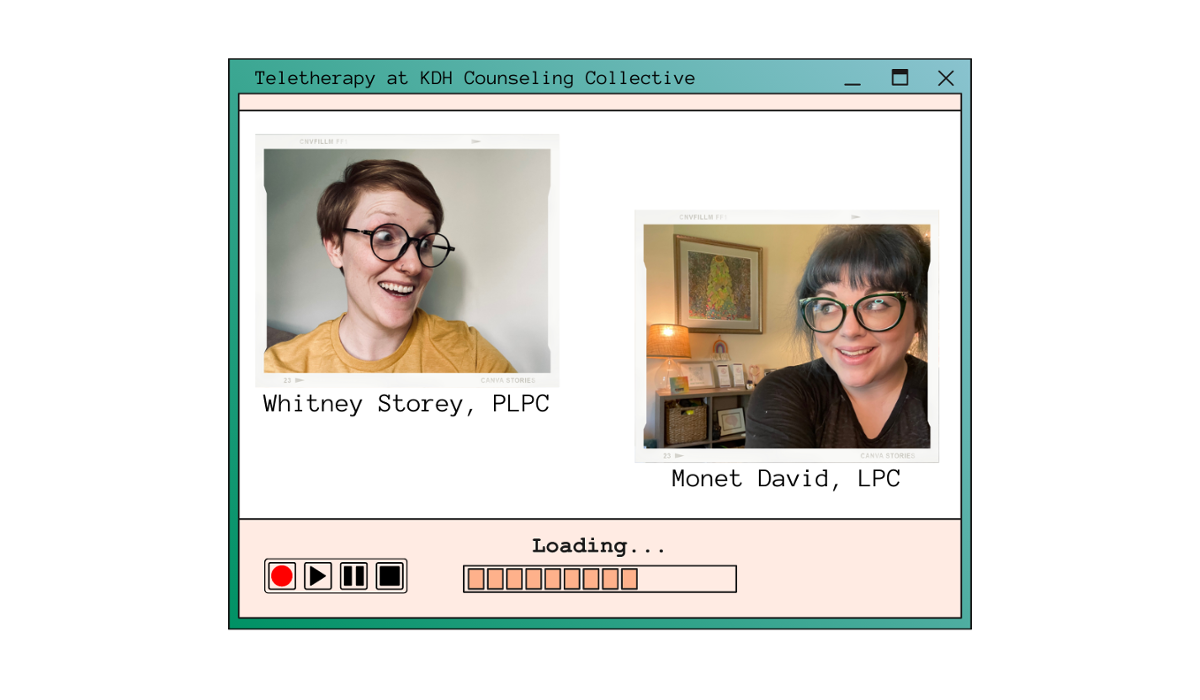
Welcome! We have not done one of these in a while so KDH Counseling presents Leaning into Therapy which has been a really long time since we've done it. I am KD Holmes, a licensed professional counselor, and I'm here today with... Hi, I'm Monet David, also a licensed professional counselor. And today we're going to dive a little bit into ADHD. So attention deficit, yeah, it's ADHD, so it would be attention deficit hyperactivity, right? Yes, yes, and you bring up a good point, it's a mouthful.
It really is. And did you know it's gone through like several iterations of labels? Did you know that history? No, I love this. Tell me. Okay, so and my brain doesn't allow for me to remember a lot of information so I'm pulling up my little cheat sheet. I'm actually writing a blog about this so be sure to look out for the blog, especially if I'm saying stuff and you're like, this is really good but I can't retain it. I hear you.
And I like to bring up this fact about ADHD when I do psychoeducation with clients who have ADHD because all mental health has stigma, but it feels like ADHD has an even more so tremendous amount of stigma. And I think it's nice to have like a target to point to because when it was initially labeled, it was called defective moral control. Oh my gosh. I know, like, hmm, your morales are defective. There's something wrong with you, right? It then turned into minimal brain dysfunction.
So we were getting closer in that it was about the brain, but like minimal brain dysfunction doesn't also land very well. It then became hyperkinetic disorder of childhood before they finally landed on, it was attention deficit disorder. Now we just combined it attention deficit hyperactivity disorder, which is still a mouthful. And guess what? They still haven't landed on what it really is because it has nothing to do with attention and everything to do with motivation. And so the misnomer behind that is, oh, people with ADHD are just like out in the clouds.
They don't really have an attention span. When we know, like when you actually survey somebody with ADHD, they have hyper attention. But it's all, it all goes back to, they have to genuinely be interested in the topic and who's genuinely interested in sitting for eight hours a day to learn a bunch of different things in school. Not me, right? I know. Yeah. So it's, it lends itself to the idea and the theory that we've talked about in our own practice amongst clinicians of the interest-based nervous system.
So like the things that don't interest us might as well not exist. And the things that do, we want to do them 24 seven. So I think that the jury is still out. Russell Barkley is kind of the preeminent scholar for ADHD things, all things ADHD. And I was lucky enough to take one of his classes for my training that I'm pursuing. And he kind of talked about the ins and outs of like how the DSM, the, the book that we use to diagnose people is still not hitting the target with ADHD.
He contributes and he made arguments for and against the criteria, but there's still room for improvement in the ability for us to be able to catch people and diagnose people appropriately and accordingly. So it's a work in progress, ADHD, I guess, in a nutshell. I love this. It's a lot to it. There's a lot to it and why. So I think my biggest, not quorum with it, but my biggest thing when it comes to this is why is it important in therapy?
Oh my gosh. Well, it's a neurotype, right? And we're all geeks about neurotype at this practice because you will also have a blog coming out soon that delves into this. If we don't account for neurotype, when it comes to clinical approaches, then we might as well just be like shouting into the abyss, right? All the techniques that we have have to consider neurotype and neurotype is exactly what it sounds like in that it's about how your brain functions and how it exists in this world.
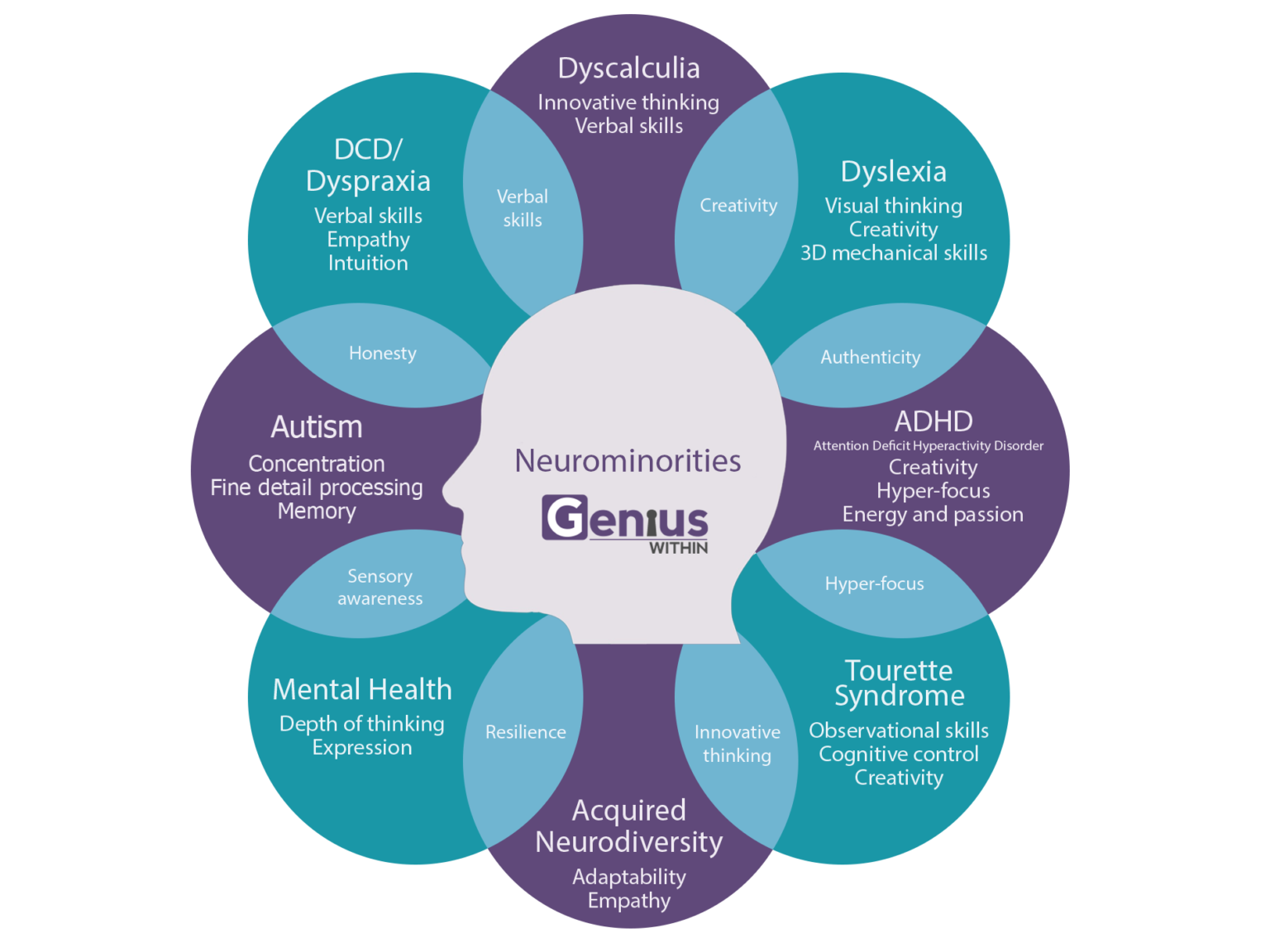
And so we like to provide again, going back to that psychoeducation piece. So much of what we do is education before we even get to the therapy part is explaining to people there's these classifications. So there's neurotypical people. So these are people without the diagnoses of neurodivergence. And then the umbrella of neurodivergence being autism, ADHD, sensory processing disorder. Sometimes OCD gets in lumped into that. Sometimes schizophrenia, dyspraxia, synesthesia. These are all things to do with the brain and how the brain takes in information and stimulus.
And so without neurotype, without those considerations, then we're doing like half the job that we should be doing. And so it's so important to know if a client is neurodivergent or not in when factoring in therapeutic goals and treatments. So I'm thinking like the textbook example, what I've heard from clients in the past is like other therapists have conceptualized something as simple as making eye contact during session as indicative of a client being committed and paying attention in session. What we know about neurodivergence is that sometimes stimulus as much as like eye contact can be really off-putting and distressing and honestly is counterintuitive to paying attention because they're working so hard to make sure they're making the right amount of eye contact.
And so just that alone can disrupt the efficacy of services, right? Like if I'm fussing at you because you're not making eye contact with me or because you're having to look up every time you answer a question for me, I'm not a really good therapist. Like I'll just say that. So we'll agree. I think it's the way that we attune to them and it's including differences. So, okay. So how does eye contact relate to attention to ADHD? How is eye contact a part of that presentation?
Because I don't look at people. I have ADHD. Yeah. Don't look when I'm talking. And often my clients will see, they'll look around the room to see what I'm looking at. And I'm like, I'm just thinking, I'm gathering my thoughts. And if I look at you, I am thinking about looking at you and not about what I want to talk about. And so I wonder what that exactly is in ADHD. There's a fancy schmancy fancy schmancy phrase for it. It's a responsive inhibitory response.
I'm doing a bad job of using the phrase, but there's Phrase basically entails like the struggle with ADHD is that you're taking in a bunch of stimulus all the time and you are hyper aware of every single stimulus. So it is an act to focus solely on what you feel like you need to be focusing on. And so I actually broke this down to a client last week where I'm like, you're not just sitting in this room, hearing me, you're sitting in this room, you're feeling the temperature of your body, you're noticing that my lights are on above you, you're noticing that there's a bright light coming at you from my window, you are hearing the sound machine, you're hearing me talking, you are acutely aware of how it feels to sit on that sofa.
And all of that is hitting you in the same degree. But you know that you need to be giving priority to what I'm saying right now. And that is a struggle sometimes. And so like, close your eyes if you need to close your eyes. Let's use our weighted blanket if you need to feel grounded in that sense and not feel so overstimulated. Does that make sense of that track? Like just the effect of stimulus on a person? Well, and I always see it as like all stimulus is equal in our brains.
That's how I interpreted it, but our brains can't differentiate what's more important than the other, the sound in the hall, the sound in this room, like it all feels just as important. Yes, yes, the discernment. Yeah, so it makes a lot of sense. And so if you have a client struggling, and so they come and they say, I'm anxious. Well, that doesn't really mean anything if you don't look at where it's coming from or what's at the root of it. Yeah.
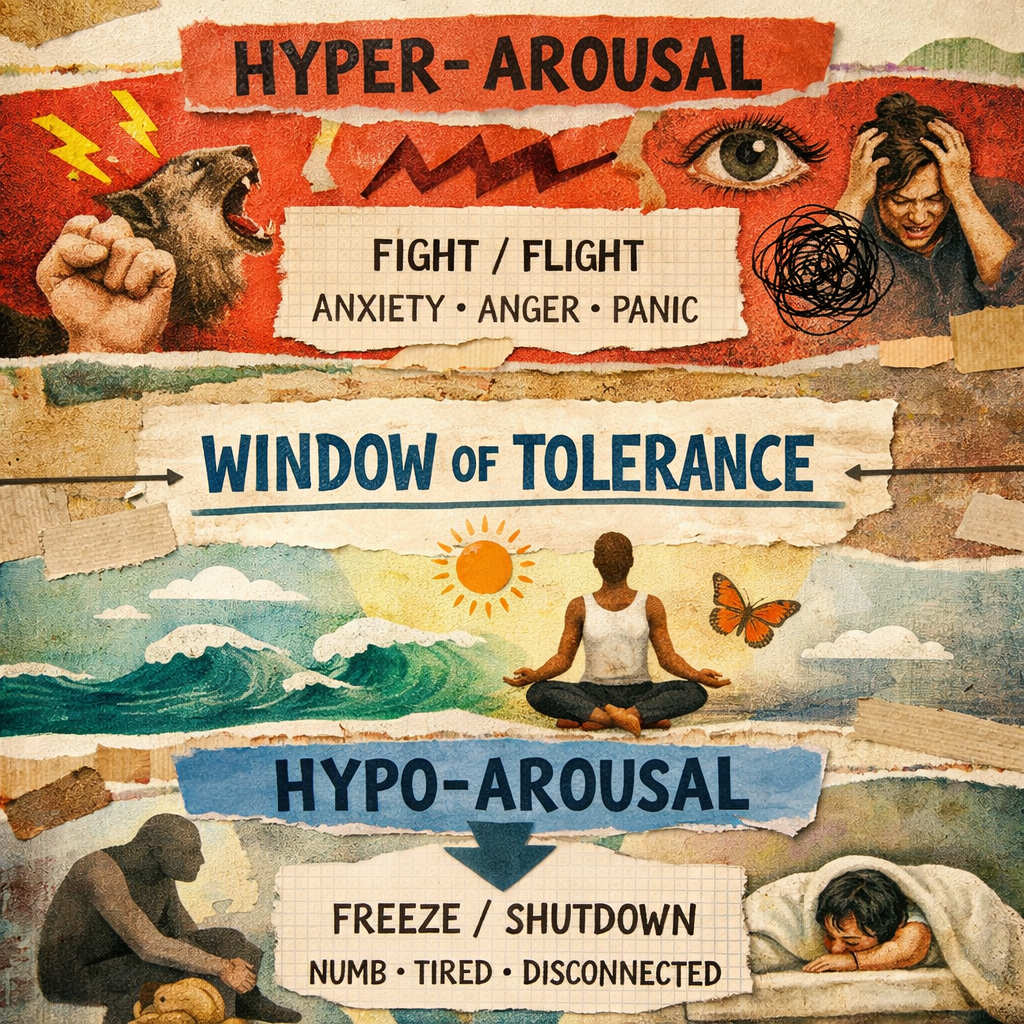
Absolutely, yeah, because it doesn't take into consideration what's contributing to that anxiety. And then ADHD is very much tied to the nervous system. We can often find that our clients have been dysregulated for long periods of time. And from that dysregulation, they have impairment and dysfunction in their life because they're just like constantly in fight or flight. And then everything else kind of starts to go to the wayside and they're often really desperate for relief from that. So it's so important to consider neurotype and if the presence of neurodivergence is there.
And sometimes the client won't have that answer. Sometimes we observe it first and then we start like, have you ever considered this? Did that ever factor into your conceptualization of how you exist? And more often than not, they're like, yes. And then that ends up being a fun thing to process with them. Well, and I think that good therapy, I don't know if that's the right way to say it, but will include these differences, not to pathologize unless it is a problem, right?
But to inform how the person experiences the world. Yeah, a hundred percent. And I think that's what we do really well in our practice is that we do avoid pathology, a conceptualization of like this being, oh, the autism's the problem or oh, ADHD is the problem. No, not at all. It is a part of who you are just as much as my blue eyes are a part of who I am. And it's often the world, not often, it is always the world that we live in that is the problem because it expects you to exist in a very specific way that just knowing what we know about biodiversity is not realistic, but we are so committed to a neurotypical world.
And what I mean by that is just expressing certain behaviors, existing in like having certain etiquette. I don't know if I'm doing a good job of explaining it or not, but like- Oh, like sitting at a table, putting your hands in your lap, right? Yes, making eye contact, not moving too much. Cause if you move too much, why are you moving? Are you anxious? Why are you fidgeting? You have to exist in a world with the fluorescent lights. Whitney made a good point of like, why do we agree on those being like the most common type of light?
They're so offensive. They're loud. I call them homophobic lights now. I'm like, please turn them off. I hate them. Yeah, yeah. So it's like, oh, and you have to go to school and often schools are full of kids and it's super loud and you just need to get on and go on and like not be bothered by it. And yeah, so it asks a lot of you. I know, I know. And these are things that in an ideal world, yes, we would love for them to change, but they probably will not be changing anytime soon, but we can change our thinking about it and how we view ourselves based on that, right?
Absolutely, yeah. So it always often like manifests as like, these are the presenting concerns. We often as clinicians say, ooh, I wonder if there's some neurodivergence at play here. We process that, we provide psychoeducation around why we suspect it to be that way. And then we acknowledge like the world is unfair and unjust. Then we move on to what are we gonna do about it, right? Like, so it's always about building efficacy, building trust in oneself and accommodating, which is like, it feels weird to say, because I don't want to minimize the experience and how distressing it can be being neurodivergent in a neurotypical world.
But I love the creativity around adaptations or like life hacks or cheat codes for life. Cause it's not dumb if it works. And when we land on something that works, it's such a light bulb exhale moment for clients that it's very rewarding as a clinician to be a part of that process with them. So give me some life hacks, I like this. Ooh, so what we know is has been effective for ADHD. It's a issue with motivation. They know everything they've got to do in life, but it's the doing that gets in the way, right?
So they're not dumb, they're not lazy. It's not that they don't know. It's just the, I gotta get up, I gotta start the task initiation of it all. So some things that have been helpful with clients is to gamify tasks. So I really center my practice on late diagnosed or just adults with ADHD. Okay, so up until this point, they've kind of managed pretty well, but then we get the privilege of all the adult responsibilities. And so sometimes executive dysfunction is compounded because you went from being a kid with very little responsibility to an adult with I gotta maintain a household.
I gotta take care of a child. I got a husband or a wife that I have to be present for. So dopamine is crucial to ADHD because what we know about the ADHD brain is that it does not produce dopamine in the same way that a neurotypical brain does. It is harder to produce. And when it does get produced, it doesn't have the same oomph. So a neurotypical person can write down a task they're going to complete, do the task and cross it off the list and they get a dopamine hit.
Oh my God, a sense of achievement. I'm rocking and rolling. It does not work that way for people with ADHD. It is not effective in that way. But to gamify things, to make them a game, to give yourself points to have a reward at the end, does work for some reason. It elicits the dopamine response. It's a better dopamine response. It's creative. You can kind of pick the reward that you want for yourself. Body doubling is really helpful. So I say like, if you've got a partner at home, ask them to initiate the task and then join in with them and you will see how much easier it is.
So in my own home. I will initiate the task. Often it's the dishes and then my partner will join in. Like, but if I asked him like, hey, go do the dishes. I mean, he'll do them, but like the timeline is extended much greater than if I were to initiate for him. And so that's kind of body doubling. I have clients who are maybe single. And so I'm like, invite that one friend over that you know is good for it and say like, I just need help getting started.
Can you help me? Can you fold clothes with me? That seems to be really effective. And then finally, I like to really promote outsourcing. So if there are things that are just like, I do not have the wherewithal for it. Can we pay somebody to do it? And this can be as informal as paying a friend to do it or as formal as hiring a maid service or cleaning service. Like there is no shame in that. There's a reason it's a profession.
There's a reason it exists is because people are using it. So like, don't get caught up in the thing. And then overall, it's about adjusting expectations. You've received the message for so long that you need to exist in a neurotypical way. You have to divorce yourself from that. Just creating a list of tasks is a task in itself and that counts for something. So you get to put the pin down and that can be all you have to do for that day.
So it's almost like deconstructing expectations if that makes sense. Yeah, I think that the last part when you talked about those expectations, there's a lot of what I do with my clients is like they have so many expectations that they're failing in some sort of way because they're not doing X, Y, Z, whatever it is. And so normalizing that and creating more reasonable expectations that they can feel proud of. And it might just be, we did the scheduling for today. Let's put that aside.
Awesome, got it. I know for myself, as you were talking about it, I can't rush. I don't know if I'm do well on time, like telling how much time things takes. And this is a common thing with my clients. And so I used to always be late and it would make me crazy. Like inside I would be anxious. I'd be anxious when I start my day. And once I get anxious, that's it, I'll be anxious for hours. So for me, I make sure I have plenty of time so I can get caught up talking to somebody and it's not the end of the world.
Things take way longer than I expect them to take. And so having plenty of time just makes my day go so much better. I talked to my clients a lot about that one and memory coach. Every time I get a memory coach, I find those super, super helpful. So like if I've had a client who misses appointments, they have a family member who reminds them of their appointments. And I think old me would have been like, there was a judgment, like, no, you need to remember on your own.
Well, some of us just aren't good at remembering those things. And that is not the end of the world. If that's your worst problem, let's not get hung up on that. Just somebody that we send the reminder to who's gonna remind you, no big deal. Yeah, I think as therapists, like being open to figure it out with them is good. Absolutely. No, that's what I'm saying. Like if it works and it works in your life, it's not dumb. No. And I think a really like important part of therapy is to not stop at, well, this is just how my brain is, right?
There is a crucial, like we need to understand, yes, this is how your brain is. And yet you still have to exist in this world, right? And I think about the example recently, it was kind of in the news where this young person, probably neurodivergent, whether it was ADHD or whatever, they're like, well, I have time blindness. So the accommodation that work will give me is that I can be late for work. No, it can't be, it's gotta be on you.
It is not your fault that you're a neurodivergent and really we don't wanna look at it in those terms, but it is your responsibility, right? And so a better accommodation is to let them know, man, I struggle with time. I'm gonna do these things to help me make sure that I show up on time to work, just to work with me on that, please. I'm gonna make my best effort to make sure that I'm doing what I need to do. And so it's this give and take of being accountable to yourself, giving yourself grace and having to exist in a world that expects a certain level from you.
I love that. Yeah, yeah, it's a challenge. And having the right support, because if people, I mean, I'm thinking of the history of it, right? If it was originally considered a moral failing. Yeah. I mean, that is so disturbing on so many levels, but we still have the roots of that in our thinking about it. And I know my clients that come have a lot of shame about their ADHD. Like it's their fault, they've missed it. If they can only get it right.
And so even sharing about these things, like I can't make it to work on time, is difficult for them, because there's a wrongness already in what they're sharing with us. So as therapists, if we can be, make sure you have a therapist that's warm and understanding about it to help you and hold you accountable through it. Very, very powerful. I love that piece, Monet. Yeah, I think so too. I think the therapeutic relationship is the perfect relationship to practice these things, coming to therapy, right?
So there's a planning involved. There is a showing up on time situation involved. There is a follow through with recommendations after the fact. So it's a good practice site. And then you have this person, if they're well-versed, that can understand if there are issues in any of that, and can work with you. And so, I mean, we talk about it a lot. If they're enacting those behaviors in therapy, they're probably doing it in other parts of their lives, right? And so it's on us as a therapist to really confront that, obviously in a therapeutic way, but just to, hey, I noticed you've been arriving 10 minutes late every single time the last three sessions.
Like, do you struggle elsewhere to show up on time? And how is that affecting you? Some people, it's not of value for them. And can, yeah, can we unpack it in that motivational kind of way? Like there isn't motivation, like maybe they don't care about being on time, right? Like it might not be a value, not in a mean way, but just like, it's not a value for them. I like that, man. Okay, we're gonna do more on this. It's super, super interesting.
I think it's showing me ADHD is so much more than attention, susceptibility, hyperactivity. It's a lot more, right? And treating our clients or the individuals that come to see us in this way, very, very powerful. Very. Last words on this, Monet. There's no cure. Anybody who's selling a cure is a snake oil salesman. But there is adaptation and things can get better. Because oftentimes by the time they cross the threshold for therapy, it's really dire. And so I like to instill hope that there are proven things to help with this.
And so it can get better. With the right kind of help. That's my thing I've been saying lately. The right kind of help that's informed. All right, so we will have more later. Yay. Bye.